
Please note: This website contains affiliate links. As an Amazon Associate, we earn from qualifying purchases at no additional cost to you.
If you’ve ever felt like your body is running on low battery no matter what you do, you’re not imagining things.
Metabolism is one of those words that gets thrown around a lot — but understanding how it actually works (and how to give it a nudge in the right direction) can make a real difference in how you feel every single day.
Good news: you don’t need to overhaul your entire life to boost your metabolism. Small, consistent shifts add up — and most of them are a lot more enjoyable than you’d think.
Whether you’re curious about metabolism boosters, want to speed up your metabolism naturally, or you’ve just been told you have a slow metabolism and aren’t sure where to start — this guide covers it all.
Jump to What You Need
- What is metabolism, exactly?
- Signs you might have a slow metabolism
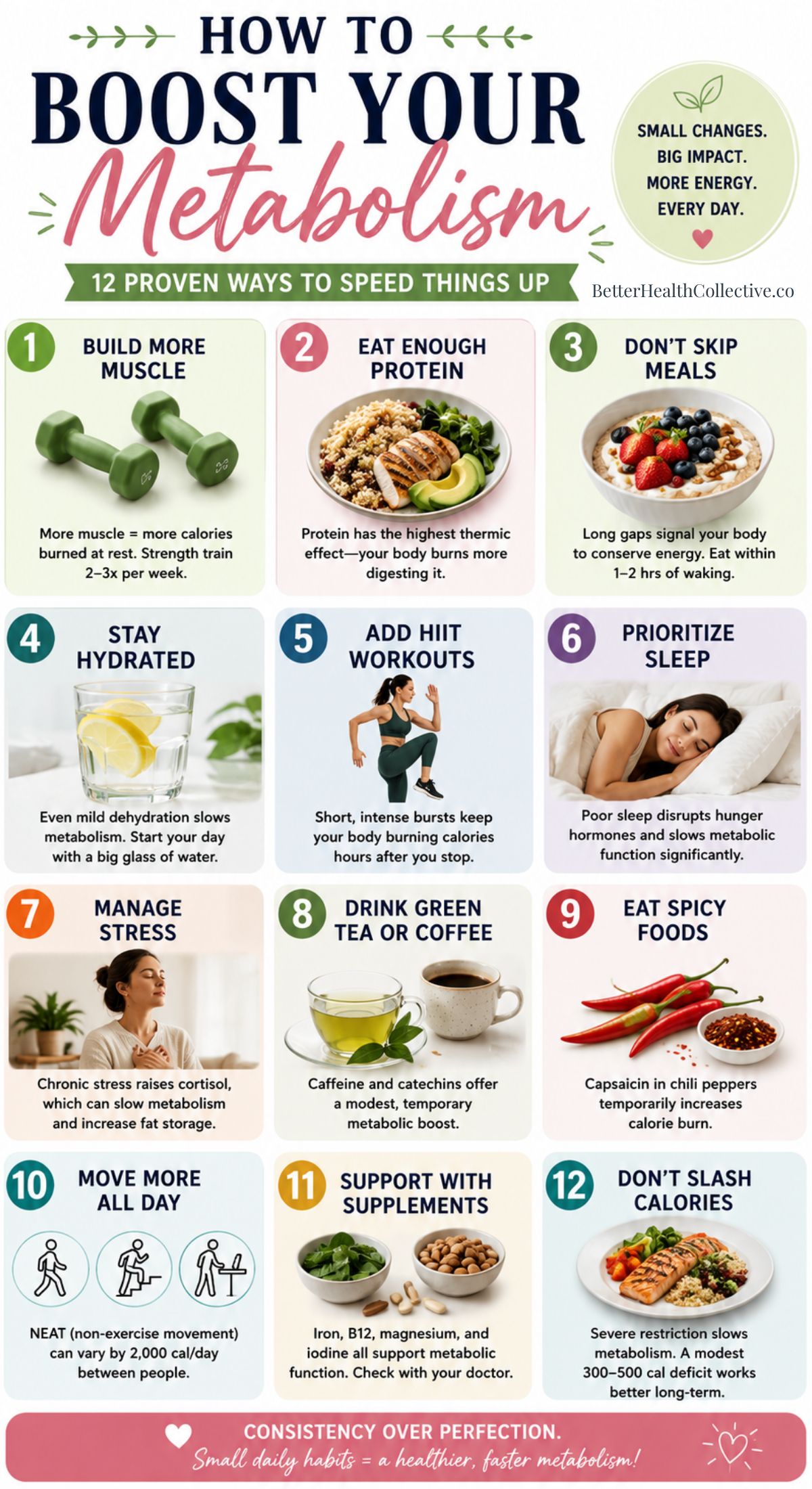
- Quick-reference: 12 ways to boost your metabolism at a glance
- The full breakdown of all 12 strategies
- Foods that boost metabolism
- Metabolism booster drinks
- FAQs
What Is Metabolism, Exactly?
Metabolism is the process your body uses to convert food and drink into energy. Even when you’re resting, your body is constantly burning calories to keep your heart beating, your lungs breathing, and your cells doing their thing. This baseline calorie burn is called your Basal Metabolic Rate (BMR).
Several factors influence your metabolism, including:
- Age (metabolism tends to slow as we get older)
- Muscle mass (more muscle = more calories burned at rest)
- Hormones (thyroid, cortisol, insulin, and others all play a role)
- Activity level
- Sleep quality
- What and when you eat
The good news? While some of these factors are fixed, many of them are things you can actually influence — which is exactly what we’re here to talk about.
Signs You Might Have a Slow Metabolism
Before diving into how to speed up your metabolism, it helps to know what a sluggish one looks like. Common signs include:
- Feeling tired even after a full night of sleep
- Difficulty losing weight even when eating well
- Feeling cold more often than those around you
- Digestive issues like constipation or bloating
- Brain fog or difficulty concentrating
- Dry skin, hair thinning, or brittle nails
If several of these resonate with you, it may be worth talking to your doctor about getting your thyroid and hormone levels checked. A slow metabolism can sometimes have an underlying cause that deserves proper attention (you can check the signs of a slow metabolism here).
12 Ways to Boost Your Metabolism Naturally
Ready for the good stuff? Here are 12 evidence-backed ways to get your metabolism working harder for you — no extreme measures required.
Quick-Reference: All 12 at a Glance
Short on time? Here’s your cheat sheet. Scroll down for the full breakdown on each one.
| Tip | Why It Works |
|---|---|
| #1 Build More Muscle | More muscle = more calories burned at rest. Strength train 2–3x/week. |
| #2 Eat Enough Protein | Protein has the highest thermic effect — your body burns more digesting it. |
| #3 Don’t Skip Meals | Long gaps signal your body to conserve energy. Eat within 1–2 hrs of waking. |
| #4 Stay Hydrated | Even mild dehydration slows metabolism. Start your day with a big glass of water. |
| #5 Add HIIT Workouts | Short, intense bursts keep your body burning calories hours after you stop. |
| #6 Prioritize Sleep | Poor sleep disrupts hunger hormones and slows metabolic function significantly. |
| #7 Manage Stress | Chronic stress raises cortisol, which can slow metabolism and increase fat storage. |
| #8 Drink Green Tea or Coffee | Caffeine and catechins offer a modest, temporary metabolic boost. |
| #9 Eat Spicy Foods | Capsaicin in chili peppers temporarily increases calorie burn. |
| #10 Move More All Day | NEAT (non-exercise movement) can vary by 2,000 cal/day between people. |
| #11 Support with Supplements | Iron, B12, magnesium, and iodine all support metabolic function. Check with your doctor. |
| #12 Don’t Slash Calories | Severe restriction slows metabolism. A modest 300–500 cal deficit works better long-term. |
1. Build More Muscle
Muscle tissue burns more calories at rest than fat tissue does — significantly more. That means the more lean muscle mass you have, the higher your resting metabolic rate. Strength training a few times a week is one of the most effective things you can do to increase your metabolism over the long term.
Try this: Aim for 2–3 strength training sessions per week. You don’t need a gym — bodyweight exercises like squats, push-ups, and lunges work great.
2. Eat Enough Protein
Here’s something a lot of people get wrong: eating too little can actually slow your metabolism down. Protein has the highest thermic effect of food (TEF) of any macronutrient — meaning your body burns more calories just digesting it compared to carbs or fat.
Protein also helps preserve muscle mass, which as we just covered, is crucial for a fast metabolism.
Try this: Aim for 25–35 grams of protein per meal. High-protein foods like eggs, Greek yogurt, cottage cheese, chicken, fish, and legumes are your friends here. For more tips on how to hit your daily protein goals (easily!), don’t miss outr Guide to Hitting 100G Protein.
3. Don’t Skip Meals (Especially Breakfast)
When you go long stretches without eating, your body can shift into conservation mode — holding onto stored energy rather than burning it efficiently. Eating regular meals and snacks keeps your metabolism humming along throughout the day.
Try this: Try to eat within an hour or two of waking up, and don’t let more than 4–5 hours pass between meals without a small snack.
4. Stay Hydrated
Even mild dehydration can slow your metabolism. Studies have shown that drinking water can temporarily boost metabolic rate — and cold water may have a slight additional edge since your body uses energy to warm it up.
Try this: Start your morning with a large glass of water before coffee. Aim for at least 8 cups a day, more if you’re active or in a warm climate.
If you are tired of drinking jugs of water, you can mix it up with our Healthy Hydration Drink Recipes or our popular Vanilla Coconut Water Electrolyte Drink recipe.
5. Add High-Intensity Interval Training (HIIT)
HIIT workouts — short bursts of intense exercise followed by brief rest periods — are remarkably effective for boosting metabolism. They create what’s known as the “afterburn effect” (technically called EPOC, or Excess Post-Exercise Oxygen Consumption), where your body continues burning extra calories for hours after the workout ends.
Try this: Even a 20-minute HIIT session 2–3 times a week can make a noticeable difference. YouTube has tons of free beginner-friendly HIIT workouts if you’re not sure where to start.
6. Prioritize Sleep
Sleep deprivation wreaks havoc on metabolism. Poor sleep disrupts hunger hormones (hello, ghrelin and leptin), increases cortisol levels, and can reduce insulin sensitivity — all of which make it harder for your body to process energy efficiently.
Try this: Aim for 7–9 hours of quality sleep per night. A consistent bedtime and a cool, dark room make a bigger difference than most people expect.
7. Manage Stress
Chronic stress keeps cortisol levels elevated, and high cortisol can slow metabolism, increase fat storage (especially around the belly), and make it harder to lose weight. Stress management isn’t just a nice idea — it’s a genuine metabolic strategy.
Try this: Even 10 minutes of intentional stress relief daily adds up. Walking outside, journaling, breathing exercises, or just stepping away from your phone counts.
8. Drink Green Tea or Coffee
Both green tea and coffee contain compounds that can give your metabolism a temporary boost. Green tea contains catechins and a small amount of caffeine, while coffee’s caffeine is a well-researched metabolism booster. These aren’t magic bullets, but they’re a pleasant addition to your routine.
Try this: 1–3 cups of green tea or coffee per day is a reasonable amount for most people. Avoid loading them with sugar and cream if you want the metabolic benefit.
IDEAS FOR YOU: Sip Your Way Slimmer: The Best Teas for Metabolism Support & Fat Burning
9. Eat Spicy Foods
Capsaicin — the compound that makes chili peppers hot — has been shown to temporarily increase metabolism and may help reduce appetite. The effect is modest, but it’s a fun, flavorful way to get a slight edge.
Try this: Add red pepper flakes, jalapeños, or sriracha to meals a few times a week. Even if you don’t love spicy food, a little goes a long way.
10. Move More Throughout the Day
Dedicated workouts matter, but so does what you do the rest of the day. Non-Exercise Activity Thermogenesis (NEAT) — all the calories you burn outside of intentional exercise — can vary by up to 2,000 calories per day between individuals. Standing, walking, fidgeting, taking the stairs… it all adds up.
Try this: Set a reminder to stand up and move for a few minutes every hour. Park farther away. Take walking meetings. Small habits compound over time.
11. Try Metabolism-Supporting Supplements (With Caution)
Certain natural metabolism boosters have some evidence behind them, including:
- Iron Supplement — low iron can make you feel sluggish and slows cellular energy production
- Vitamin B12 — essential for energy metabolism; deficiency is common, especially in plant-based eaters
- Magnesium — involved in hundreds of metabolic processes
- Iodine — critical for healthy thyroid function
Always talk to your doctor before adding new supplements, especially if you have an existing health condition or take medications.
Best Seller

Pure Encapsulations Magnesium (Glycinate) - Supplement to Support Stress Relief, Sleep, Heart Health, Nerves, Muscles, and Metabolism* - with Magnesium Glycinate - 90 Capsules
Shop on Amazon
$27.00
Supplement to Support Stress Relief, Sleep, Heart Health, Nerves, Muscles, and Metabolism
We earn a commission if you make a purchase, at no additional cost to you.
09/25/2026 04:05 am GMT
12. Don’t Drastically Cut Calories
This one surprises people. Severe calorie restriction signals to your body that food is scarce, which causes it to slow metabolism to conserve energy. This is sometimes called “metabolic adaptation” and it’s one of the reasons very low-calorie diets often backfire long-term.
Try this: If you’re looking to lose a few pounds, aim for a modest calorie deficit (around 300–500 calories below your maintenance level) rather than drastic restriction. Slow and steady genuinely wins this race.
Foods That Boost Metabolism
What you eat is one of the most powerful levers you have. Some of the best metabolism-boosting foods include:
- Lean proteins: chicken, turkey, fish, eggs, cottage cheese, Greek yogurt
- Legumes: lentils, chickpeas, black beans — high in protein and fiber
- Whole grains: oats, quinoa, brown rice — complex carbs that keep blood sugar stable
- Chili peppers: capsaicin content gives metabolism a temporary boost
- Ginger: may increase calorie burn and reduce hunger
- Apple cider vinegar: some evidence for blood sugar stabilization and metabolic support
- Coffee and green tea: caffeine and catechins offer a modest metabolic lift
- Water: yes, staying hydrated counts as metabolism support
Metabolism Booster Drinks
Beverages can be a surprisingly effective part of your metabolism strategy. Beyond coffee and green tea, consider:
- Warm lemon water: a classic morning ritual with hydration benefits
- Ginger tea: anti-inflammatory and may support digestion and metabolism
- Apple cider vinegar drinks: mix 1–2 tbsp with water and a little honey
- High-protein smoothies: cottage cheese smoothies, Greek yogurt-based blends
- Matcha: a higher-catechin alternative to green tea with a more sustained energy lift
Learn more about the best fat-burning metabolism booster teas.
Frequently Asked Questions About Boosting Your Metabolism
How long does it take to boost your metabolism?
It depends on the strategy. Some things — like drinking a glass of cold water or eating a protein-rich meal — have a small, immediate effect. Others, like building muscle through consistent strength training or improving your sleep quality, take weeks to months to show meaningful results. The most effective approach is stacking multiple habits together over time rather than relying on any single fix.
Can you have a fast metabolism naturally?
Yes — some people are born with a naturally higher metabolic rate, often due to genetics, a larger body size, or more lean muscle mass. But even if you weren’t born with a revved-up metabolism, you can absolutely improve yours through consistent lifestyle habits. Genetics set the baseline; your choices move the dial.
What’s the fastest way to speed up your metabolism?
Building lean muscle through strength training has the most significant long-term impact on your resting metabolic rate. In the short term, prioritizing protein at every meal, staying well hydrated, and getting adequate sleep are the lowest-effort, highest-return strategies to start with today.
Is there a metabolism reset diet?
You may have heard of various “metabolism reset” approaches, which typically involve a period of eating at maintenance calories to help your body recover from the effects of long-term dieting or metabolic adaptation. Some people find this helpful after extended periods of low-calorie eating. Talk to a registered dietitian if you’re interested in exploring this approach for your situation.
Do metabolism boosters actually work?
It depends on what you mean. Supplements marketed as “metabolism boosters” vary widely in quality and effectiveness — and most offer modest benefits at best. The lifestyle strategies in this article (protein intake, strength training, sleep, hydration, stress management) are backed by solid research and consistently outperform any supplement. That said, certain nutritional deficiencies — like low iron, B12, or iodine — can genuinely slow metabolism, so correcting those with your doctor’s guidance can make a noticeable difference.
Does eating breakfast really boost your metabolism?
The “breakfast kickstarts your metabolism” idea is a little oversimplified, but there’s something to it. Eating within a couple of hours of waking helps keep blood sugar stable and prevents the energy-conservation mode your body can slip into after a long overnight fast. The key isn’t breakfast specifically — it’s simply not going too long without fueling up.
What slows down metabolism the most?
Several things can significantly slow your metabolism: chronic sleep deprivation, prolonged high stress (and the cortisol that comes with it), severe calorie restriction, very low muscle mass, thyroid issues, and nutritional deficiencies. If you feel like you’re doing everything right but your metabolism still feels sluggish, it’s worth getting bloodwork done to rule out underlying causes.
How does age affect metabolism?
Metabolism does tend to slow with age — but research suggests it’s less dramatic than most people think, and a lot of it comes down to muscle loss rather than age itself. Adults tend to become less active over time and lose muscle mass gradually, which lowers their resting calorie burn. The good news: strength training and adequate protein intake can largely offset this, at any age.
Can drinking water really boost metabolism?
Yes, actually — and it’s one of the easiest strategies on this list. Studies have shown that drinking water can temporarily increase metabolic rate by up to 30% for about 30–40 minutes. Cold water may have a slight extra edge since your body expends energy warming it up. It’s not a dramatic effect, but it’s free, immediate, and good for you in about fifteen other ways too.
What are the best natural metabolism boosters?
The most effective natural metabolism boosters are lifestyle-based: strength training, high-protein eating, quality sleep, and stress management. On the food and drink side, green tea, coffee, ginger, chili peppers, and staying well hydrated all offer modest metabolic benefits. There’s no single magic food — it’s the combination that counts.
The Bottom Line
Boosting your metabolism isn’t about finding one magic trick — it’s about stacking small, smart habits that work together. Build some muscle. Eat enough protein. Sleep well. Drink your water. Move your body. Manage your stress.
None of those things are glamorous, but they work. And unlike crash diets or extreme approaches, they’re sustainable — which means your metabolism will actually thank you for them over time.
Bookmark this page so you can come back to it as a reference, and explore the articles below to go deeper on any of these topics.
Related Articles You’ll Love
- Metabolism Booster Drinks: Recipes to Sip Your Way to a Faster Metabolism(coming soon!)
- Signs of a Slow Metabolism (and How to Reset It)
- Slow Metabolism? Boost It with These 15 Easy Morning Recipes
- Metabolism Boosting Foods: The Complete List (coming soon!)
1544172
Please note: This website contains affiliate links. As an Amazon Associate, we earn from qualifying purchases at no additional cost to you.