

Please note: This website contains affiliate links. As an Amazon Associate, we earn from qualifying purchases at no additional cost to you.
Feeling exhausted all the time? Forgetting why you walked into a room? Dealing with random tingling in your hands or feet that seems to come out of nowhere?
It might be easy to blame stress, getting older, poor sleep, or simply having too much on your plate. And honestly, sometimes that’s exactly what’s going on.
But sometimes your body is waving a little red flag.
Vitamin B12 deficiency is surprisingly common, especially among older adults, vegetarians, vegans, people with digestive conditions, and anyone taking certain medications. The tricky part is that the symptoms often show up gradually, making them easy to dismiss or explain away.
The good news is that once you know what to look for, B12 deficiency is often fairly easy to identify and treat.
Let’s look at some of the strange symptoms that could indicate your body isn’t getting enough vitamin B12.
What Is Vitamin B12?
Vitamin B12 is an essential nutrient that helps your body produce red blood cells, maintain healthy nerve function, support brain health, and create DNA.
In other words, it’s kind of a big deal.
Because B12 plays a role in so many important functions, low levels can affect everything from your energy and mood to your memory and nervous system.
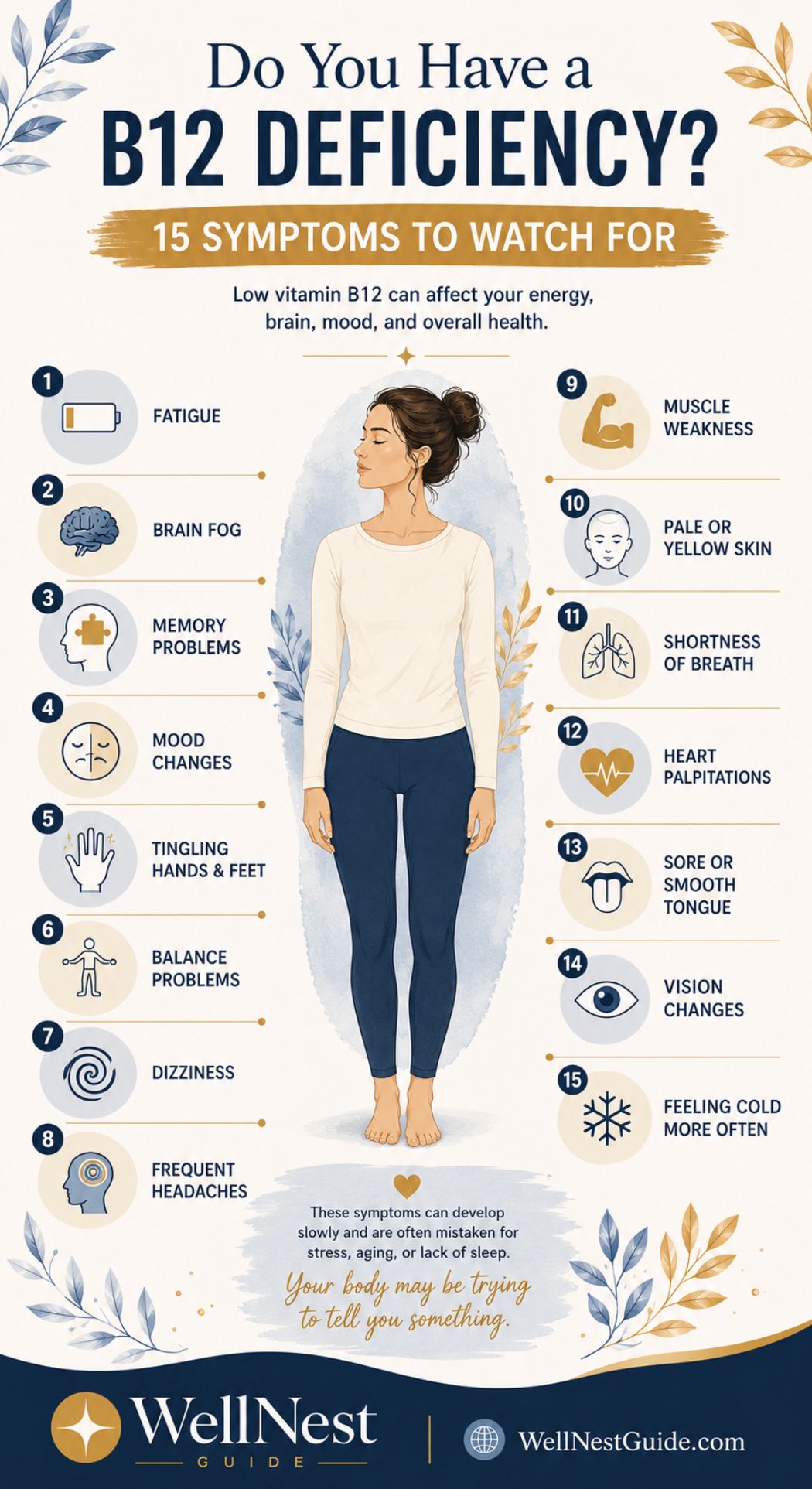
15 Signs You Might Have a Vitamin B12 Deficiency
1. Constant Fatigue That Doesn’t Improve With Rest
Everyone feels tired sometimes.
But B12-related fatigue often feels different. It’s the kind of exhaustion that lingers even after a full night’s sleep. You wake up tired, stay tired, and somehow still feel tired after your second cup of coffee.
When B12 levels are low, your body struggles to produce healthy red blood cells that carry oxygen throughout your body. Less oxygen means less energy.
2. Brain Fog
Have you ever stared at your computer screen for five minutes trying to remember a password you’ve used for years?
Brain fog is one of the most commonly reported symptoms of low B12.
People often describe it as feeling mentally sluggish, unfocused, forgetful, or unable to concentrate the way they normally would.
3. Memory Problems
Occasionally forgetting where you left your keys is normal.
But persistent memory issues can sometimes be linked to low B12 levels, especially in older adults. Some people notice they have trouble recalling names, appointments, conversations, or information that used to come easily.
4. Mood Changes
Vitamin B12 doesn’t just affect your body—it also affects your brain.
Low B12 levels have been associated with mood changes including irritability, low motivation, increased anxiety, and feelings of depression.
While B12 deficiency isn’t the only cause of mood changes, it’s one potential contributor that’s worth investigating.
5. Tingling Hands and Feet
This is one of the more unusual symptoms.
Many people describe a “pins and needles” sensation in their hands, feet, legs, or fingers.
Because vitamin B12 helps support healthy nerves, deficiency can sometimes lead to nerve-related symptoms like tingling, numbness, or burning sensations.
6. Balance Problems
Have you ever felt unexpectedly unsteady when walking?
Low B12 can affect the nervous system and interfere with balance and coordination. Some people report feeling wobbly, clumsy, or less stable than usual.
It’s not something most people immediately connect to a vitamin deficiency, which is why it often goes overlooked.
7. Dizziness
If you’ve been experiencing unexplained dizziness or lightheadedness, low B12 may be worth discussing with your healthcare provider.
Reduced oxygen delivery from low red blood cell production can sometimes contribute to feelings of dizziness, particularly when standing up quickly.
8. Frequent Headaches
Headaches can have countless causes, but B12 deficiency is one possibility.
Researchers have observed associations between low B12 levels and certain types of headaches, including migraines in some individuals.
9. Muscle Weakness
When your body isn’t functioning optimally, your muscles can feel the effects.
Some people with B12 deficiency notice weakness, reduced endurance, or feeling like everyday physical tasks suddenly require more effort than they used to.
10. Pale or Yellow-Tinted Skin
Your skin can sometimes provide clues about what’s happening internally.
A vitamin B12 deficiency may contribute to pale skin or a slightly yellowish appearance due to changes in red blood cell production and breakdown.
11. Shortness of Breath
Climbing a flight of stairs shouldn’t leave you feeling like you just ran a marathon.
Because B12 deficiency can contribute to anemia, some people experience shortness of breath during activities that previously felt easy.
12. Heart Palpitations
When oxygen delivery is compromised, your heart may work harder to compensate.
This can sometimes lead to heart palpitations, a racing heartbeat, or a sensation that your heart is pounding harder than usual.
Any persistent heart-related symptoms should always be evaluated by a healthcare professional.
13. A Smooth, Swollen, or Sore Tongue
This symptom surprises a lot of people.
Some individuals with low B12 develop a smooth, red, swollen, or tender tongue. The condition, called glossitis, can make eating and speaking uncomfortable.
It isn’t one of the most common symptoms, but it is a recognized sign of deficiency.
14. Vision Changes
In more severe cases, prolonged B12 deficiency may affect the optic nerve.
Some people experience blurry vision, double vision, or other visual disturbances.
While uncommon, it’s another reason not to ignore symptoms that seem unusual or unrelated.
15. Feeling Cold More Often Than Usual
If you’re constantly reaching for a sweater while everyone else seems perfectly comfortable, low B12 could potentially play a role.
Reduced red blood cell production can make it harder for your body to efficiently deliver oxygen throughout the body, which may contribute to feeling cold more frequently.
Who Is Most At Risk for B12 Deficiency?
Certain groups have a higher risk of developing low B12 levels, including:
- Adults over age 50
- Vegetarians and vegans
- People with Crohn’s disease or celiac disease
- Individuals who have had weight-loss surgery
- People taking acid-reducing medications
- People taking metformin for diabetes
- Anyone with digestive conditions that affect nutrient absorption
Vitamin B12 and GLP-1 Medications
If you’re taking a GLP-1 medication like Ozempic, Wegovy, Mounjaro, or Zepbound, you may have heard discussions about B12 supplements.
GLP-1 medications don’t directly cause vitamin B12 deficiency. However, they often reduce appetite significantly, which can make it easier to fall short on important nutrients over time if you’re not paying close attention to your nutrition.
Many healthcare providers encourage people using GLP-1 medications to focus on adequate protein intake, nutrient-dense foods, and routine monitoring of key nutrients. Depending on your individual situation, your healthcare provider may recommend supplements to help support overall nutrition.
How Do You Know If You Have Low B12?
The symptoms of B12 deficiency overlap with many other health conditions.
That’s why guessing usually isn’t the best strategy.
A simple blood test can help determine whether your vitamin B12 levels are low and whether additional testing may be needed.
If you’ve been experiencing several of the symptoms on this list, it’s worth bringing them up with your healthcare provider.
How to Increase Your B12 Levels
The best approach depends on the underlying cause of the deficiency.
Many people can improve their B12 status through:
- B12-rich foods such as beef, fish, eggs, dairy products, and shellfish
- Fortified foods
- Oral vitamin B12 supplements
- Prescription B12 injections in some cases
Your healthcare provider can help determine which option is most appropriate for you.
The Bottom Line
Vitamin B12 deficiency can show up in some surprisingly strange ways. From brain fog and fatigue to tingling feet and balance problems, the symptoms often develop gradually and are easy to brush off as everyday stress or aging.
The good news is that B12 deficiency is often treatable once it’s identified.
If several of these symptoms sound familiar, consider talking with your healthcare provider about whether testing your B12 levels makes sense. Sometimes getting answers starts with paying attention to the subtle signals your body has been sending all along.
SHARE WITH A FRIEND!
Please note: This website contains affiliate links. As an Amazon Associate, we earn from qualifying purchases at no additional cost to you.