

Please note: This website contains affiliate links. As an Amazon Associate, we earn from qualifying purchases at no additional cost to you.
If you’ve been wondering whether collagen benefits are worth the hype, you’re in good company — collagen supplements have quietly become one of the most searched wellness topics for women, and for good reason.
But before you add the best collagen supplements for women to your cart, there’s one thing about collagen that almost nobody mentions on the label’s front side — and if you’re paying attention to your protein intake, you’ll want to know it.
Let’s walk through what collagen actually does, which type makes sense for you, and how to choose one you’ll actually love using. And yes, we’ll get to the little secret, too.
JUMP TO: Top Picks for the Best Collagen Supplements
Why Everyone’s Talking About Collagen Benefits
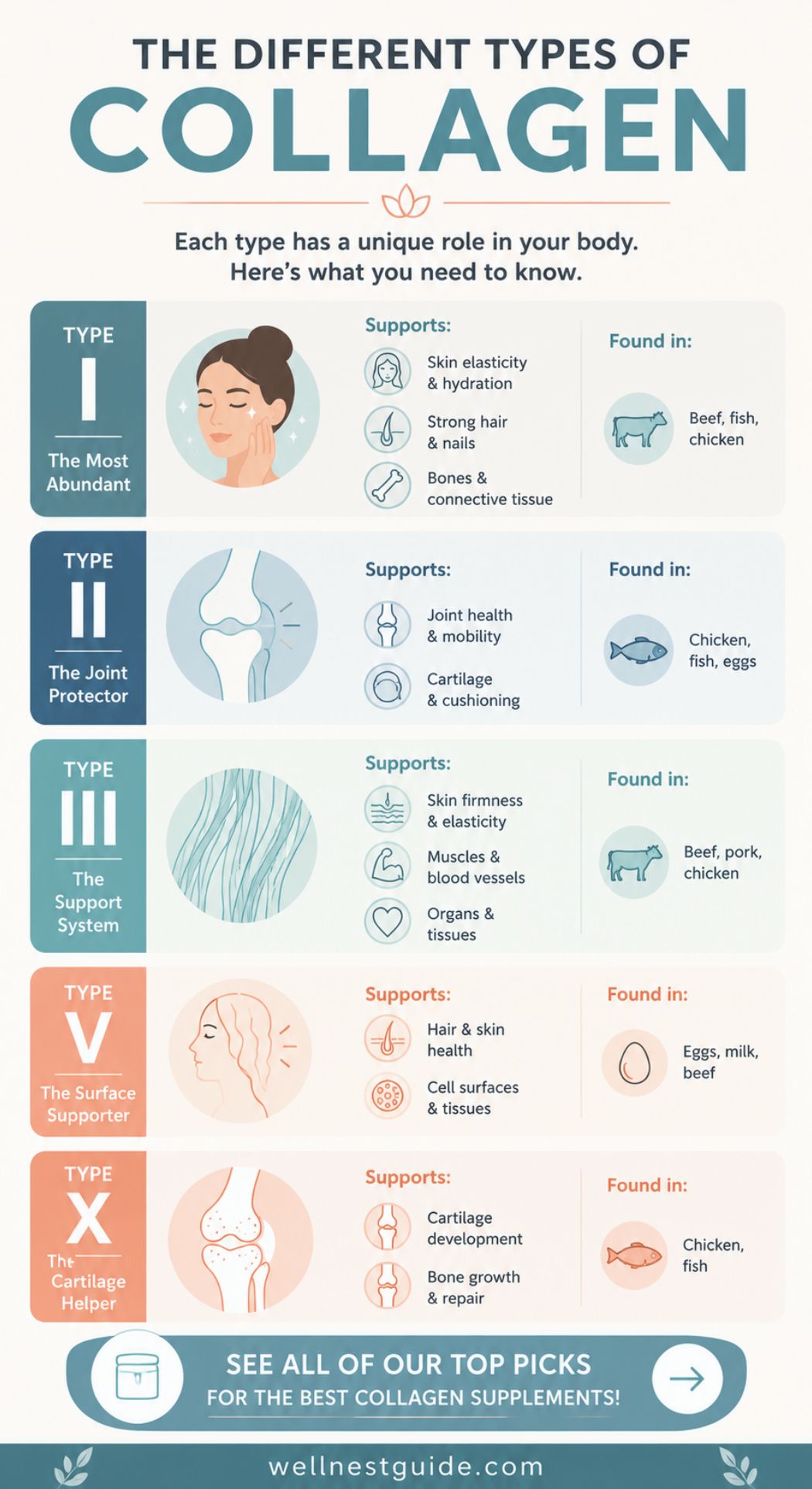
Collagen is the most abundant protein in your body — it’s the scaffolding that supports your skin, hair, nails, joints, and even your gut lining. When people talk about that “bouncy,” well-rested look skin has in our twenties, they’re really talking about collagen.
Here’s the part that catches most of us off guard: our natural collagen production starts to slow in our mid-twenties, and it dips more noticeably through our thirties and forties. That gradual shift is one reason skin can start to feel a little less firm, joints a little creakier after a long walk, and hair a little slower to grow.
This is where collagen supplements come in. Research suggests that hydrolyzed collagen peptides may support skin elasticity and hydration, and many women notice stronger nails and more comfortable joints after a couple of months of consistent use. Results vary from person to person — collagen works best as part of a bigger picture that includes protein-rich meals, vitamin C, and good sleep — but as far as daily wellness habits go, it’s a gentle, easy one to keep.
Marine, Bovine, Peptides: Which Collagen Is Right for You?
Walk down the supplement aisle (or scroll Amazon for five minutes) and you’ll see collagen in every possible form. The differences matter less than the marketing suggests, but they do matter. Here’s the friendly translation:
- Hydrolyzed collagen (collagen peptides). This is collagen that’s been broken down into smaller pieces your body can easily absorb. It’s the most researched form and the one most experts recommend as a default. If a label says “peptides” or “hydrolyzed,” you’re in the right place.
- Bovine collagen. Sourced from cows (look for grass-fed), bovine collagen is rich in types I and III — the ones most associated with skin, hair, and general connective tissue. It’s usually the most budget-friendly and the most common form in powders.
- Marine collagen. Sourced from fish, marine collagen is almost pure type I, which is the type most concentrated in skin. It’s a lovely option if you don’t eat beef or pork, and some research suggests its smaller peptide size may absorb especially well.
- Multi-collagen blends. These combine several types (often I, II, III, V, and X) from multiple sources for broader coverage — skin, joints, gut. A nice “cover all the bases” choice, especially in capsule form.
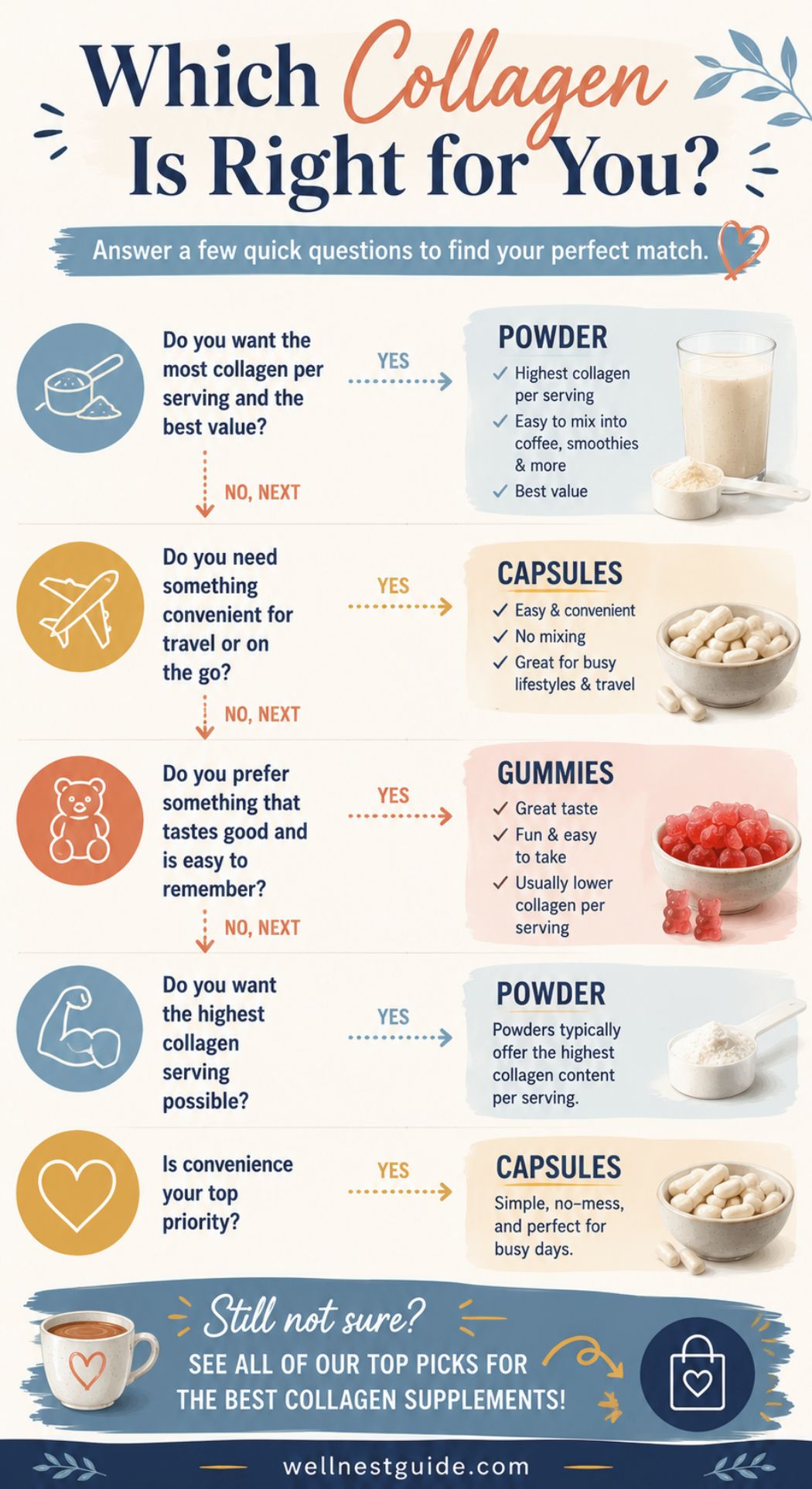
So… powder, capsules, gummies, or liquid?
Honestly, the best format is the one you’ll actually take every day. Powders give you the biggest dose per serving (usually 10–20g) and stir invisibly into coffee or smoothies. Capsules are travel-friendly but deliver smaller amounts, so you’ll take several. Gummies are the most fun and the least potent — and watch the added sugar. Liquid collagen sits somewhere in the middle and tends to cost more per serving.
The One Thing Nobody Tells You… Collagen Isn’t a “Complete” Protein
Okay, here’s the secret — and once you see it, you’ll notice it hiding in the fine print of nearly every collagen tub you pick up.
Collagen is protein, yes. But it isn’t a complete protein.
It’s missing tryptophan (one of the nine essential amino acids) entirely, and it’s low in leucine, the amino acid that matters most for maintaining and building muscle.
What does that mean in real life?
Those 20 grams of collagen you stir into your morning coffee don’t fully “count” toward your daily protein goal the way chicken, eggs, Greek yogurt, or a whey shake do. If you’re intentionally eating high-protein right now — whether you’re focused on maintaining muscle, supporting your metabolism, or working alongside a GLP-1 plan — treat collagen as a bonus for your skin, hair, and joints, not as a protein source.
Don’t just take our word for it: flip over a tub of Vital Proteins and you’ll find it printed right on the label — “collagen is not a complete protein… do not use to replace dietary protein.” When the brands themselves say it, you know it’s not a technicality.
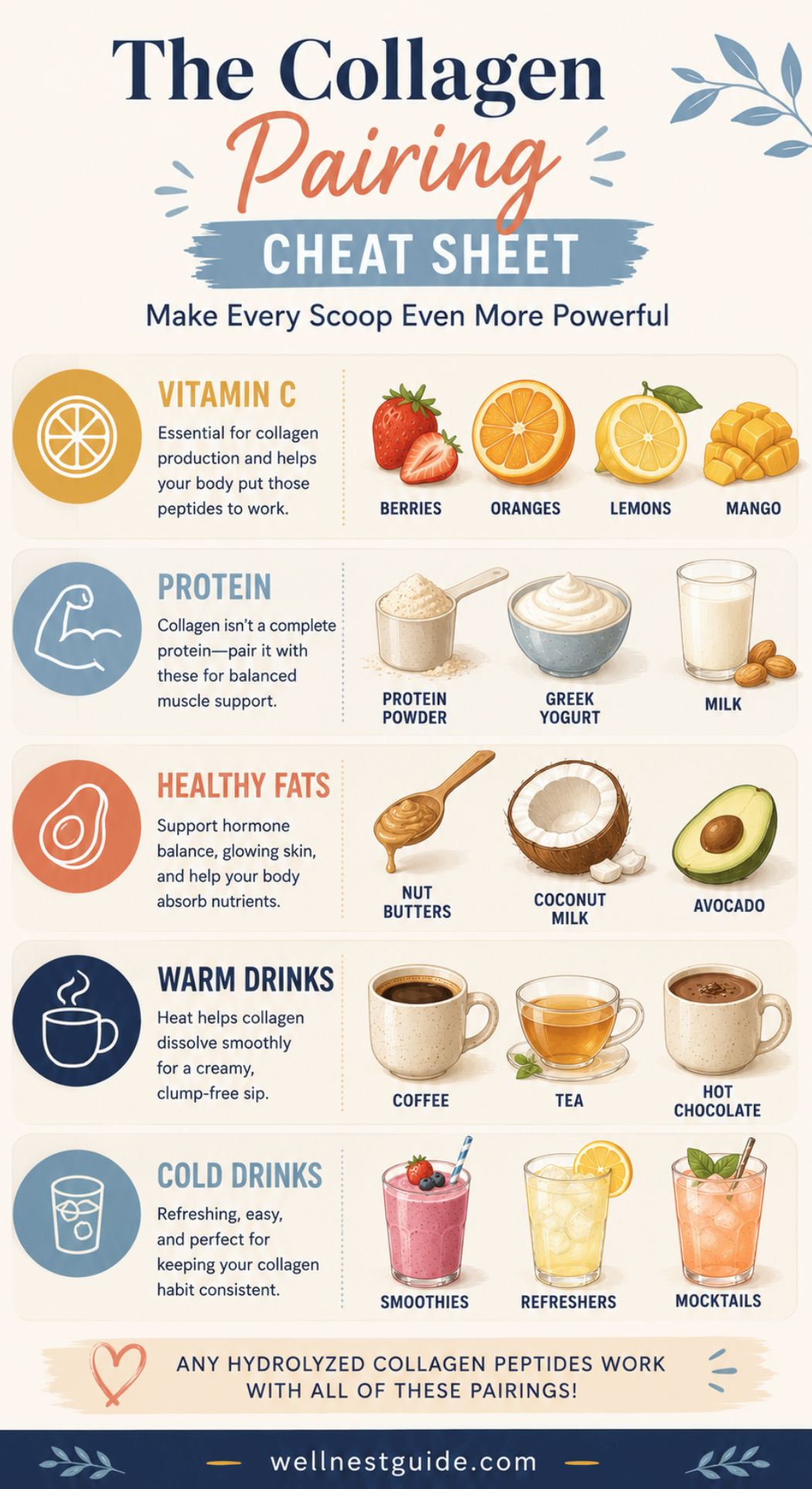
The happy workaround? Stack it. Stir your collagen into a whey protein shake, a bowl of Greek yogurt, or alongside a protein-forward breakfast. You get the complete amino acids your muscles want and the collagen-specific peptides your skin loves. Best of both worlds, no math required.
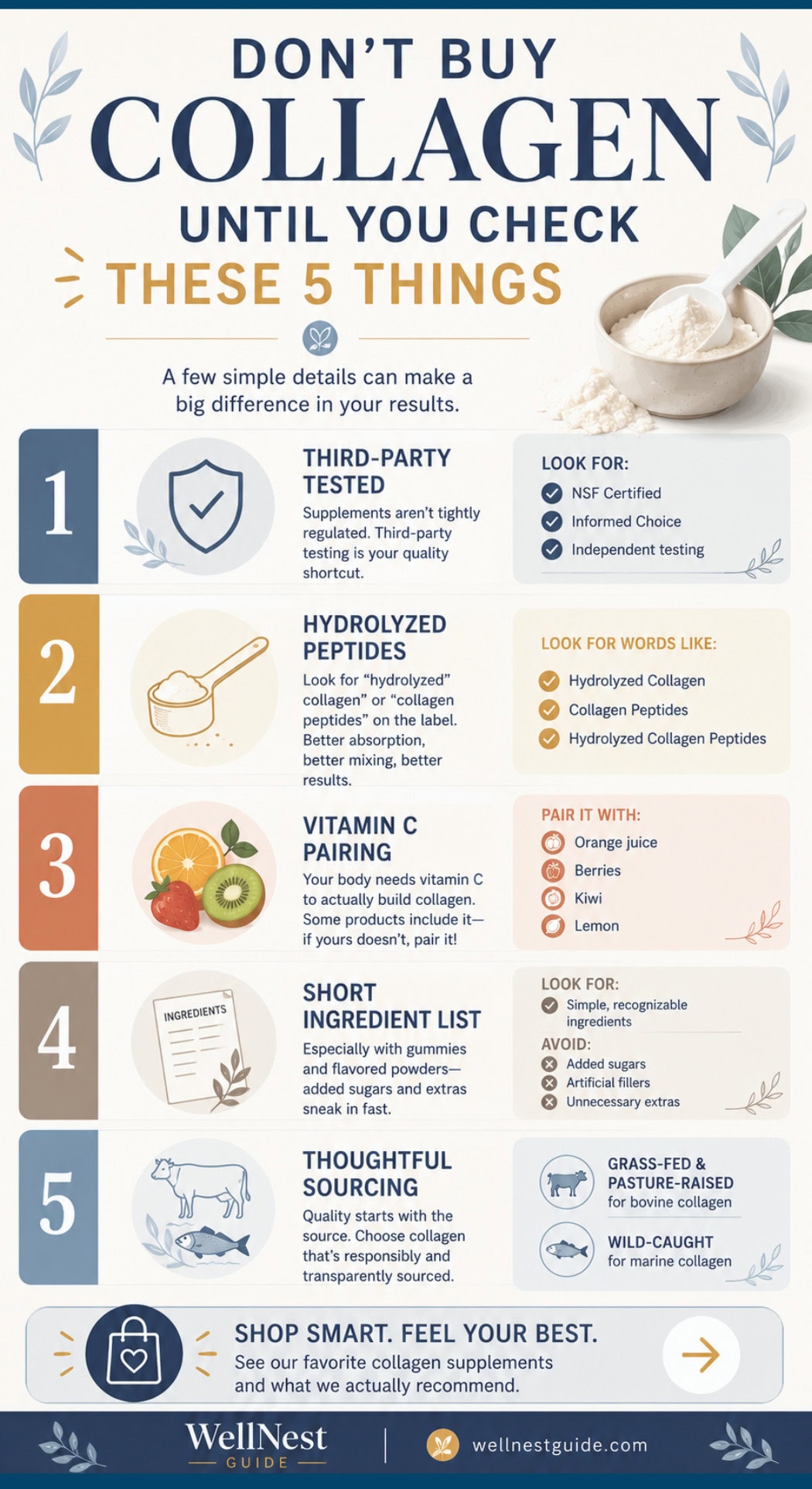
What to Look For Before You Buy Collagen
A few quick things separate a lovely collagen from a forgettable one:
#1 | Third-party testing
Look for NSF Certified or Informed Choice seals, or brands that publish independent testing. Supplements aren’t tightly regulated, so this is your quality shortcut.
#2 | Hydrolyzed or “peptides” on the label
We won’t get into all the science behind this, but this translates to:
- Better absorption
- Better mixing
- Better results
#3 | A short ingredient list
Especially with gummies and flavored powders — added sugars sneak in fast.
#4 | Thoughtful sourcing
If you are considering buying bovine collagen, look for grass-fed and pasture-raised. If you are looking at marine collagen, wild-caught is the way to go – and is usually featured on the front of the container.
#5 | A vitamin C pairing
Your body needs vitamin C to actually build collagen. Some products include it; if yours doesn’t, taking your collagen with a glass of orange juice or alongside a vitamin C-rich meal does the same job.
Here are a few simple ways you can pair Vitamin C, healthy fats and protein with your collagen to get the best possible results.
The Best Collagen Supplements for Women: Our WellNest Picks
These are the products we’d genuinely point a friend toward — including two that have earned a permanent spot in our own routine. (Heads up: some links below are affiliate links, which means we may earn a small commission at no extra cost to you. We only recommend products we’d use ourselves.)
Best Overall: Vital Proteins Collagen Peptides (the one in our coffee every morning)
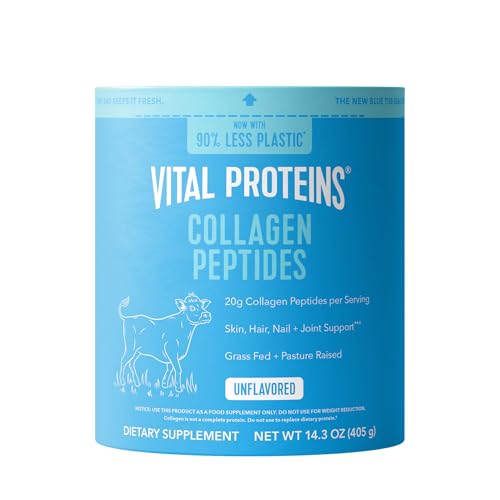
Vital Proteins Collagen Peptides Powder
Shop on Amazon
$22.86
Grass Fed Collagen Peptides for Hair, Nail, Skin, Bone & Joint Health, Unflavored, 14.3oz
We earn a commission if you make a purchase, at no additional cost to you.
10/09/2026 02:02 pm GMT
This is the collagen we’ve personally used for years — a scoop in the morning coffee, every single day. It dissolves completely with no gritty texture, and the unflavored version genuinely disappears into coffee. Each serving delivers 20g of grass-fed, pasture-raised bovine peptides (types I and III), and with over 67,000 reviews averaging 4.6 stars, it’s the category’s gold standard for a reason.
Why we love it: effortless daily habit, clean sourcing, and the serving size is generous compared to capsules. One honest note: in plain water, unflavored collagen has a faint taste some people notice — coffee and smoothies hide it completely.
Smartest Add-On: Biosil Collagen Booster
(the other half of my collagen routine)
Here’s a fun plot twist: Biosil contains no collagen at all. Instead, its patented ch-OSA complex is designed to support your body’s own collagen production — a generator rather than a supplement. I recently added it alongside my daily peptides, and the “make your own + take your own” combination is a genuinely smart stack.
Why we love it: it works a completely different angle than peptide powders, so the two complement rather than duplicate each other. Small capsules, no taste, no mixing.
One honest note: it’s pricier per serving than basic collagen, and because it works with your body’s own production, patience matters — think months, not weeks. At the time of this article, I’m about two months in and am starting to see the benefits.
Best Capsules: Vital Vitamins Multi Collagen Complex
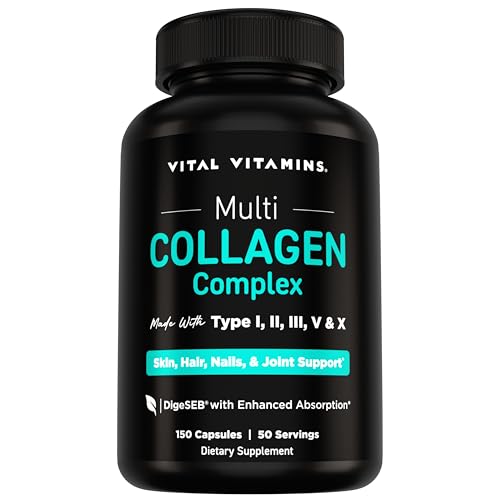
Vital Vitamins Multi Collagen Peptides Capsules
Check Price on Amazon
Type I, II, III, V, X Collagen Supplements - Grass-Fed, Non-GMO
If powders aren’t your thing, this is the capsule to get. It covers five collagen types (I, II, III, V, and X) from multiple sources, includes a digestive enzyme blend for absorption, and sits at roughly $0.16 per capsule — with over 52,000 reviews at 4.6 stars backing it up.
Why we love it: broadest type coverage on this list, travel-friendly, excellent value. One honest note: capsules deliver a much smaller dose than a powder scoop, so consistent daily use matters even more here.
Best Budget Capsules: ForestLeaf Multi Advanced Collagen

ForestLeaf Multi Collagen Pills
Check Price on Amazon
$22.95
Hyaluronic Acid + Vitamin C | Hydrolyzed Collagen Supplements | Multi Collagen Capsules Peptides for Skin, Wrinkles
We earn a commission if you make a purchase, at no additional cost to you.
10/09/2026 07:07 pm GMT
ForestLeaf bundles types I, II, and III collagen with hyaluronic acid and vitamin C — remember, that’s the nutrient your body needs to build collagen — at around $0.19 per capsule with a 4.5-star average across 23,000+ reviews.
Why we love it: the built-in vitamin C pairing means one less thing to think about. One honest note: like all capsules, the per-serving collagen dose is modest compared to powders.
Best for Hair: Nutra Harmony Biotin, Collagen & Keratin
If hair is your main motivation, this Amazon best seller combines collagen with biotin, keratin, and hyaluronic acid — a full “hair support” lineup in one capsule. With 18,500+ reviews and 40,000+ purchased monthly, it’s the crowd favorite in the hair category.
Why we love it: purpose-built for hair goals rather than general wellness. One honest note: the high biotin dose can interfere with certain lab tests (thyroid panels included), so mention it to your doctor before bloodwork.
Best Value: Youtheory Advanced Collagen Tablets
Value Pick

Youtheory Advanced Collagen
Check Price on Amazon
$9.59
6,000 mg Hydrolyzed Collagen Peptides & Amino Acids with Vitamin C
10/09/2026 07:06 pm GMT
At roughly $0.07 per tablet, Youtheory is the most affordable way into a daily collagen habit. Each serving delivers 6,000mg of hydrolyzed peptides enhanced with vitamin C, and its 46,000+ reviews at 4.6 stars suggest the low price isn’t cutting corners. A especially nice fit for anyone building a bone-and-joint-focused routine in their fifties and beyond.
Why we love it: unbeatable cost per day, vitamin C included. One honest note: the serving is six tablets daily, which is a commitment if you’re not a pill person.
Best Marine Collagen: Vital Proteins Marine Collagen
The pescatarian-friendly sister to our everyday powder. Wild-caught, 12g of type I peptides per serving, and the same clean-dissolving quality we’ve trusted for years in the bovine version. Type I is the collagen most concentrated in skin, which makes marine a lovely pick if glow is your goal.
Why we love it: The brand consistency we can personally vouch for (after years of using the regular Vital Peptides), and the best-reviewed marine option (9,700+ reviews on Amazon).
One honest note: marine collagen costs more per gram than bovine — that’s true across every brand, not just this one.
Budget marine alternative:
Anthony’s Hydrolyzed Marine Collagen delivers wild-caught Type I Peptides at nearly half the per-ounce cost ($1.91/oz), with a 4.6-star average. Fewer bells and whistles, same core ingredient.
Best All-in-One: Cevitol Marine Collagen Peptides

Cevitol Marine Collagen Peptides
Check Price on Amazon
$42.95
Hydrolyzed Ultra-fine Collagen Powder with Biotin & Vitamin C for skin, hair, nails, joints. Non-GMO, dissolves easily.
10/09/2026 05:02 pm GMT
The newcomer making noise — Amazon’s “Overall Pick” with 20,000+ purchased in the past month. It bundles marine collagen with vitamin C, hyaluronic acid, and biotin, essentially combining three sections of this article into one tub.
Why we love it: the complete formula means no stacking required. One honest note: it’s newer to market with a smaller review history (around 1,000 reviews so far), so it hasn’t stood the test of time like the others here — promising, but early.
The Best Collagen for Women at Every Age
In your thirties: think of collagen as prevention. Your production has just started its slow decline, so a simple daily peptide powder (like Vital Proteins) is plenty. Build the habit now and your future self says thank you.
In your forties: this is when many women first notice the shift — skin recovery slows, joints speak up after workouts. A peptide powder plus a booster like Biosil covers both replacement and production. If perimenopause is part of your season, collagen pairs nicely with the protein-forward eating that supports muscle through hormonal change (just remember our complete-protein rule).
In your fifties and beyond: bone and joint support move to the front. Consistency matters more than ever, so choose the format you’ll never skip — the value-friendly Youtheory or a multi-collagen capsule both make daily use easy, and vitamin C pairing becomes non-negotiable.
Collagen Questions, Answered
How long until I notice anything?
Honest answer: give it 8–12 weeks of daily use. Nails often respond first, skin next, joints last. Anyone promising changes in days is selling something.
Can I take collagen every day?
Yes — daily, consistent use is exactly how the research studies do it. Most people take 10–20g of peptides daily without any trouble.
Does collagen break a fast?
Technically yes — it’s protein, so it has calories and triggers a (small) metabolic response. If your fast is for blood sugar or gut-rest reasons, save the scoop for your eating window. If you fast loosely, a scoop in coffee is a common compromise many women happily make.
Collagen or biotin for hair?
They work differently — biotin supports keratin production while collagen provides the amino acid building blocks. That’s why hair-focused formulas often include both (see the Nutra Harmony pick above).
Do collagen supplements actually work?
The research picture is genuinely encouraging for skin elasticity, hydration, and joint comfort, though studies vary in quality and some benefits are modest. What’s clear: hydrolyzed peptides absorb well, and consistent use matters. What’s also clear: collagen isn’t a miracle — it’s a helpful supporting player in a routine that includes enough complete protein, vitamin C, sleep, and sun protection.
The Bottom Line
Collagen can be a genuinely lovely addition to your routine — an easy scoop in your morning coffee that quietly supports your skin, nails, and joints over time. Just go in knowing what it is (a well-researched beauty-and-joint helper) and what it isn’t (a replacement for the complete protein your body needs). Pick the format you’ll actually use daily, pair it with vitamin C, and give it a full season before you judge.
Your morning coffee was already a ritual. This just makes it a smarter one.
Please note: This website contains affiliate links. As an Amazon Associate, we earn from qualifying purchases at no additional cost to you.