
Please note: This website contains affiliate links. As an Amazon Associate, we earn from qualifying purchases at no additional cost to you.
Here’s a conversation that happens in doctors’ offices every single day.
A woman comes in exhausted. Not “busy week” tired — bone-deep, cold-all-the-time, winded-on-the-stairs tired. She eats well. Plenty of salads, whole grains, yogurt, maybe fish a couple of times a week. Her diet, on paper, contains enough iron.
Then her ferritin comes back — that’s the measure of her body’s stored iron — and it’s scraping the bottom of the range.
How does that happen? How can you eat enough iron and still be running on empty?
The answer is one of the most useful things I’ve ever learned about nutrition: eating iron and absorbing iron are two completely different things. And the difference comes down to a distinction most of us were never taught — the difference between heme and non-heme iron.
The Two Kinds of Iron (This Is the Part Nobody Explains)
All the iron in food falls into two categories, and your body treats them almost like different nutrients.
- Heme iron comes from hemoglobin and myoglobin — the oxygen-carrying proteins in blood and muscle. That means it’s found only in animal flesh: meat, poultry, fish, and shellfish. Your body absorbs heme iron through its own dedicated doorway, efficiently and reliably — somewhere around 15–35% of what you eat actually makes it into your bloodstream, largely regardless of what else is on your plate.
- Non-heme iron is everything else: the iron in spinach, lentils, beans, whole grains, nuts, fortified cereals — and, surprisingly, eggs. This form has a much harder journey. Absorption typically runs somewhere between 2% and 20%, and it’s easily sabotaged by other things in the same meal.
Read those numbers again, because they explain the mystery patient above.
Two meals can contain the same milligrams of iron on paper and deliver wildly different amounts to your body. The spinach salad isn’t lying about its iron content — your body just can’t collect most of it, especially if the salad came with the wrong companions.
Which brings us to the sabotage.
The Everyday Habits That Quietly Block Your Iron
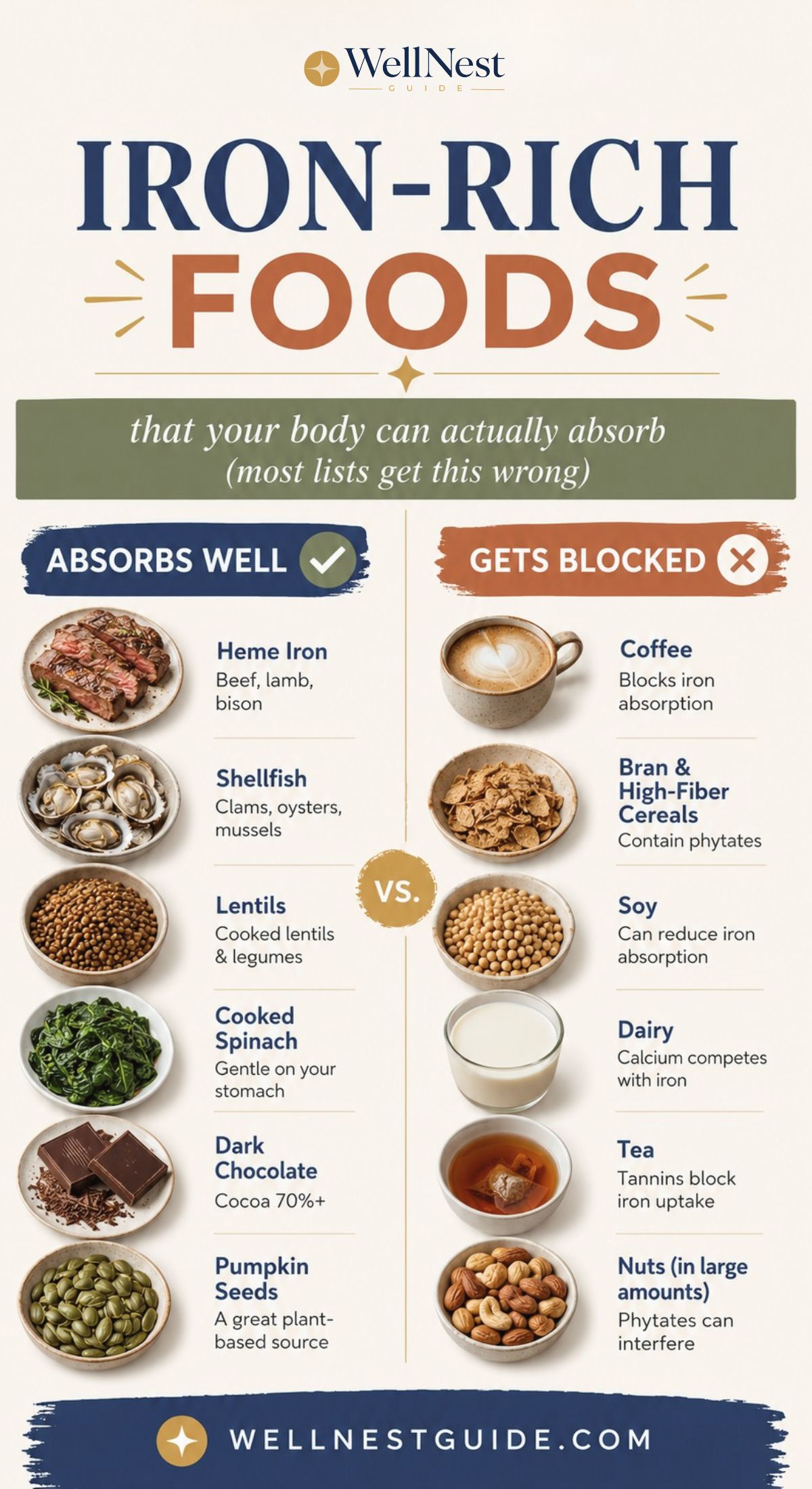
This is where healthy eating can accidentally work against you. Non-heme iron — the kind in all your plant foods — is blocked by some of the most common, most virtuous things on a wellness-minded plate:
- Calcium. Dairy is the big one. The calcium in yogurt, milk, and cheese directly competes with non-heme iron for absorption when they’re eaten together. That yogurt-and-spinach-salad lunch? The yogurt is canceling a good chunk of the salad’s iron. Calcium supplements taken with meals do the same thing.
- Coffee and tea. The polyphenols and tannins that make coffee and tea so lovely also bind up non-heme iron impressively well. Coffee with your fortified oatmeal can cut its iron absorption dramatically. This might be the single most common iron-blocking habit in existence: a plant-based breakfast plus a big cup of coffee, every morning for years.
- Phytates in whole grains and legumes. The same fiber-rich foods we (rightly) eat for gut and hormone health contain compounds that bind minerals, iron included. This doesn’t make whole grains bad — it just means their iron is even less available than the label suggests.
None of these foods are villains. The problem isn’t what you’re eating — it’s the combinations and the timing. Which is genuinely good news, because combinations and timing are easy to fix.
Why Women Run Low So Much More Often
Before the fixes, one more piece of the puzzle — because this isn’t a random-bad-luck problem. It’s overwhelmingly a women’s problem, and there are real reasons why.
- Monthly losses add up. Every period costs iron, which is why women’s daily iron needs are roughly double men’s during the reproductive years — 18mg versus 8mg. Most women don’t know their target is that high, and a typical modern diet doesn’t come close without intention.
- Perimenopause can accelerate the drain. For many women, cycles in their 40s become heavier and more unpredictable before they taper off. Heavier bleeding means faster iron loss — arriving at exactly the life stage when exhaustion gets shrugged off as “hormones” or “just getting older.” Low ferritin hides comfortably behind that assumption, sometimes for years.
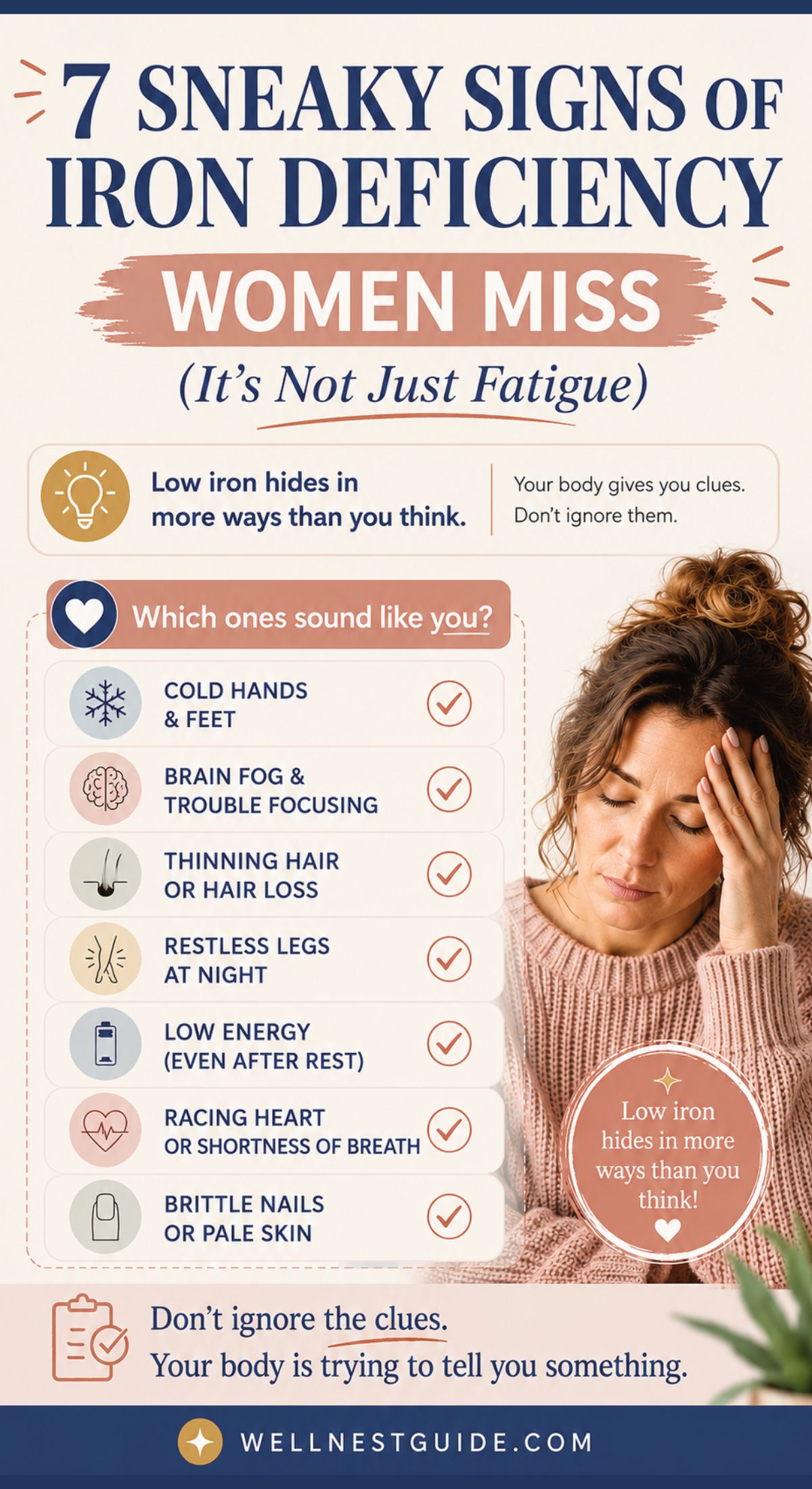
- The symptoms wear a hormone costume. Fatigue, brain fog, feeling cold, thinning hair, low mood, restless legs — every one of those can be blamed on thyroid issues or perimenopause, and every one can also be low iron. The overlap is so complete that iron deserves a spot on the checklist any time “hormone symptoms” show up.
- The standard blood test misses it. A routine panel checks hemoglobin, which only falls once you’re well into anemia. Ferritin — your stored iron — drains long before that, and you can feel awful with “normal” hemoglobin and a nearly empty tank. If you take one sentence to your next appointment, make it this one: “Can you check my ferritin, not just my hemoglobin?”
One important guardrail: if your ferritin does come back low, work with your doctor on the plan rather than grabbing a bottle off the shelf. Unlike most nutrients, extra iron isn’t harmless — your body has no easy way to offload an excess — so this is a test-first, supplement-second situation, always.
How to Absorb More Iron: The Practical Playbook
Here’s the beautiful part: once you understand the two kinds of iron and what blocks them, boosting your absorption barely requires changing what you eat. It’s mostly about pairing and timing.
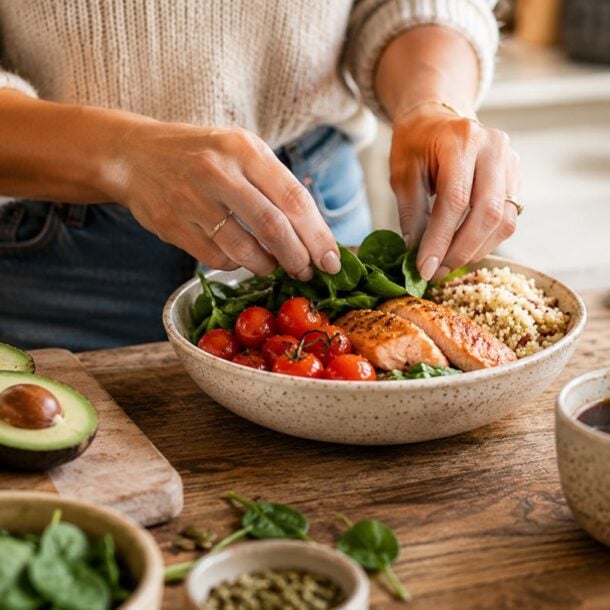
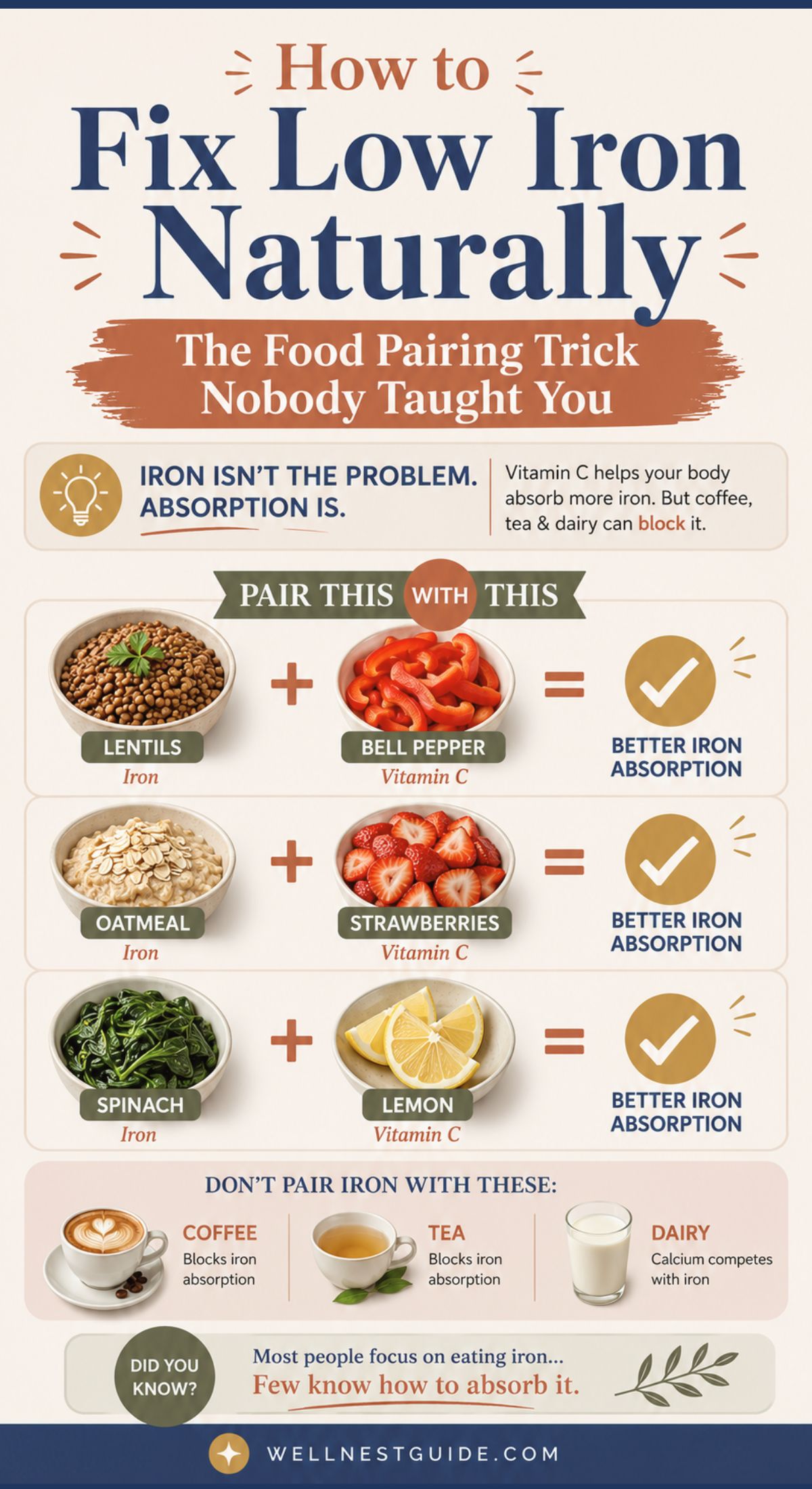
1. Give your plant iron a vitamin C partner. This is the most powerful lever you have. Vitamin C in the same meal can multiply non-heme iron absorption several times over. In practice: bell peppers or tomatoes with your lentil soup, strawberries or citrus alongside your oatmeal, a squeeze of lemon over your greens. Same food, several times the iron.
2. Move your coffee and tea, don’t lose them. Keep the ritual — just shift it an hour or more away from iron-rich meals. Coffee between meals barely interferes; coffee alongside breakfast interferes a lot. This one timing change may do more for your iron than any food swap.
3. Separate calcium from iron-focused meals. If you’re making one meal count for iron, keep the dairy and the calcium supplement away from that meal. Enjoy them at other times of day, guilt-free.
4. Add a little heme to unlock the rest. Here’s an elegant trick called the “meat factor”: even a small amount of meat, poultry, or fish in a plant-heavy meal boosts absorption of the plant iron alongside it. A few shrimp in a veggie stir-fry or a bit of chicken thigh in a bean soup raises the value of the whole bowl. Small amounts, outsized effect.
5. Choose your seafood strategically. If red meat isn’t your thing, oysters, mussels, sardines, and tuna are quiet heme powerhouses in a lighter package — some of the best absorbed-iron-per-bite foods you can eat.
6. Cook in cast iron. A modest bonus rather than a magic bullet: acidic dishes like tomato sauce simmered in a cast-iron pan pick up real, usable iron from the cookware itself.
7. Don’t sleep on dark meat. Chicken thighs and dark turkey carry several times the heme iron of breast meat — the darker color literally comes from the same oxygen-carrying proteins that hold the iron.
Stack even three or four of these and the same grocery list starts delivering meaningfully more iron to your bloodstream — no supplements required unless your labs say otherwise.
The Best Iron-Rich Foods for Women (The Quick List)
If you want the shopping-list version — the iron-rich foods that combine decent iron content with good absorption — here’s where I’d start:
Heme sources (best absorbed): beef, lamb, chicken thighs and dark turkey, oysters, mussels, sardines, tuna, and shrimp. Even small portions count, and they boost the plant iron eaten alongside them.
Plant sources (pair these with vitamin C): lentils, white beans, chickpeas, spinach and Swiss chard, pumpkin seeds, tofu, quinoa, and dark chocolate (yes, really — 70%+ cacao is a legitimate iron source, and I refuse to bury that news).
Fortified helpers: iron-fortified oatmeal and cereals — just enjoy your coffee an hour later, not alongside.
The winning formula for women is a mix: some heme a few times a week, plant sources with a vitamin C partner daily, and blockers timed away from your iron-focused meals.
Iron Absorption: Common FAQs
Why is my iron low if I eat healthy?
Because most “healthy” iron sources are non-heme (plant-based) iron, which absorbs at only 2–20% — and common companions like coffee, tea, dairy, and whole grains block it further. Add monthly losses, and many women fall behind despite genuinely good diets. It’s usually an absorption problem, not an eating problem.
How can I increase iron absorption naturally?
Pair plant-iron meals with vitamin C (peppers, citrus, tomatoes, berries), keep coffee, tea, and dairy an hour or more away from those meals, include small amounts of meat or seafood to activate the “meat factor,” and cook acidic dishes in cast iron.
What is ferritin and why does it matter more than a normal iron test?
Ferritin measures your body’s stored iron — the reserve tank. It drops long before hemoglobin does, which means you can feel exhausted with a “normal” standard blood panel. Asking for a ferritin test catches low iron months or years earlier.
Does coffee really block iron?
Yes — tannins and polyphenols in coffee and tea significantly reduce non-heme iron absorption when consumed with a meal. The fix is timing, not quitting: enjoy them between meals instead.
Do women need more iron than men?
Considerably more — roughly 18mg daily versus 8mg for men during the reproductive years, because of monthly losses. Needs drop after menopause, but perimenopause (with heavier cycles) is often when iron stores quietly hit their lowest.
The Energy You’ve Been Missing
If you’ve been dragging through your days while doing everything “right” — the salads, the whole grains, the reasonable portions — I hope this reframes things. You may not have an eating problem at all. You may have an absorption problem, and absorption problems are wonderfully fixable: a vitamin C partner here, a relocated coffee there, a ferritin test to know exactly where you stand.
Your energy isn’t a personality trait. Sometimes it’s just iron — sitting right there on your plate, waiting for you to unlock it.
Related Article: Take a Deeper Dive into Why Protein Heavy Diets Often Run Iron-Poor Lives
This article is for informational purposes only and is not medical advice. Fatigue has many possible causes, and both low and excess iron can be harmful. Please test before supplementing — ask your healthcare provider about a ferritin test, and never start an iron supplement without confirmed low levels and medical guidance.
Please note: This website contains affiliate links. As an Amazon Associate, we earn from qualifying purchases at no additional cost to you.