
Please note: This website contains affiliate links. As an Amazon Associate, we earn from qualifying purchases at no additional cost to you.
You Aren’t Crazy, You’re Just “Backed Up”
We’ve all been there. It’s the week before your period, and suddenly your favorite pair of jeans refuse to button. You look in the mirror and wonder how you can feel so bloated when you haven’t done anything differently. At the same time, your patience is running low, your energy has disappeared, and even small annoyances seem much bigger than they should.
For years, women have been told this is just part of life. PMS happens. Bloating happens. Mood swings happen. You’re expected to power through it and wait for things to return to normal.
But what if those symptoms aren’t separate problems at all?
What if your bloating and your bad moods are actually connected?
As it turns out, your gut and your hormones are constantly working together behind the scenes. When one starts struggling, the other often feels the effects. That’s why so many women notice bloating, irritability, fatigue, and PMS symptoms showing up at the exact same time.
Why Bloating and Mood Swings Often Show Up Together
If you’ve ever felt bloated, emotional, exhausted, and uncomfortable all at once, you’re definitely not alone. Many women notice these symptoms tend to arrive as a package deal, especially during certain times of the month.
Part of the reason is that hormones can influence digestion. During different phases of your cycle, digestion naturally slows down for many women. Food may move through the digestive tract more slowly, which can lead to constipation, bloating, gas, and that heavy feeling that makes you want to unbutton your pants by lunchtime.
At the same time, your gut plays an important role in how your body processes and eliminates hormones. So when digestion slows down, it’s not just your stomach that notices. Your entire system can feel the effects.
Meet the Body’s Most Underappreciated Team: Your Gut and Your Hormones
Most of us think of digestion and hormones as completely separate systems. If you’re bloated, you assume it’s a stomach issue. If you’re moody or dealing with PMS, you assume it’s a hormone issue.
But your body doesn’t separate things quite so neatly.
Your gut and your hormones are constantly communicating with each other. Think of them as coworkers on the same team. When one department falls behind, the other often ends up dealing with the consequences.
One of the best examples of this involves estrogen, one of the body’s primary female hormones.
The “Trash Collector” Analogy (The Science Made Simple)
Let’s keep this simple. Your body makes hormones, uses what it needs, and then gets rid of what it no longer needs. Think of your digestive system as your body’s trash collection service.
Once your body is finished using a batch of hormones, your liver helps process them and sends the leftovers toward the digestive tract so they can leave the body. The goal is simple: use it, package it, and move it out.
But what happens when the trash collector falls behind?
If you’re constipated, bloated, or things simply aren’t moving very well, that cleanup process can become less efficient. Instead of moving out quickly, hormone byproducts may spend more time hanging around than they should.
That’s where things can start to snowball.
Researchers are still learning more about the connection between gut health and hormone balance, but we do know that digestion plays an important role in how the body processes estrogen. When digestion slows down, some women notice more bloating, breast tenderness, heavier periods, and mood changes.
In other words, the same sluggish digestion that has your stomach feeling miserable may also be contributing to some of the symptoms you typically blame on hormones.
Why Bloating Is More Than Just an Annoyance
Most of us think of bloating as a cosmetic problem. Your pants feel tight, your stomach feels swollen, and suddenly nothing fits quite right. While it’s certainly uncomfortable, bloating is often a sign that your digestive system isn’t functioning at its best.
When food sits in the digestive tract longer than it should, it can create extra gas, pressure, and discomfort. That pressure is what leaves you feeling stuffed even when you haven’t eaten very much.
But digestion isn’t the only thing happening inside your gut.
Your gut is also closely connected to many of the chemical messengers that influence how you feel. In fact, most of the body’s serotonin is produced in the gut. Serotonin plays a role in mood, emotional well-being, sleep, and overall feelings of calm and balance.
That doesn’t mean every bad mood starts in your digestive system. Life is more complicated than that. However, it does help explain why digestive issues and emotional symptoms often seem to show up together. When your gut feels off, you often feel off too.
Could This Be You?
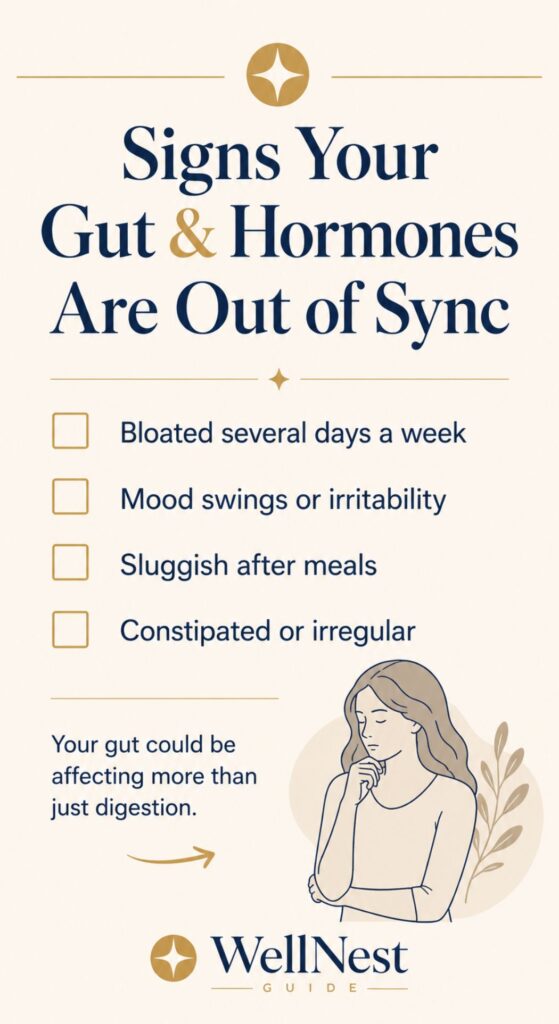
Your gut-hormone connection may deserve a closer look if you regularly experience:
- Bloating several days a week
- Constipation or infrequent bowel movements
- PMS symptoms that seem worse than they used to be
- Mood swings before your period
- Heavy or uncomfortable periods
- Feeling sluggish after meals
Many women assume these symptoms are simply part of getting older or something they have to live with. While occasional symptoms are normal, persistent digestive issues can be worth paying attention to.
3 Simple Daily Habits to Help Clear the Traffic and Reduce Bloating and Bad Moods
Now for the good news: you do not need a cabinet full of expensive supplements or a complicated, restrictive diet to fix this. Because your gut heals incredibly fast, a few small, daily changes have the potential to completely turn things around.
If you want to clear that hormonal traffic jam, stop the bloating, and get your happy moods back, start with these three simple habits today:
Habit #1: Waking Up Your Digestive System (The Morning Flush)
Think about what you do first thing in the morning. For a lot of us, we roll out of bed, immediately hit the button on the coffee maker, and pour a giant cup of caffeine on an empty stomach.
While that coffee might wake up your brain, it can actually startle a sleeping digestive system.
When you sleep at night, your digestive tract goes into a deep rest mode. It hits the pause button. If you immediately dump iced coffee or a heavy breakfast into it, it’s like waking someone up by splashing cold water on their face—it causes stress and slows things down.
Instead, the easiest way to combat a hormone traffic jam is with a habit we call The Morning Flush.
Tomorrow morning, before you touch your coffee or your phone, pour yourself a large glass of warm lemon water.
It sounds too simple to work, but the biology behind it is beautiful. The warmth of the water acts like a gentle, natural alarm clock for your stomach muscles. It tells your intestines to gently contract and start moving yesterday’s food along. Follow that water with just 5 to 10 minutes of light movement—like a quick walk around the block or some lazy living room stretches—to physically help push that traffic down.
The Hormone Connection: Remember, your liver packages up your used-up estrogen “trash” and sends it to your gut to be pooped out. If you aren’t going to the bathroom first thing in the morning, that trash is just sitting there, waiting to rip open and leak back into your bloodstream.
By waking up your gut with warm water, you ensure the garbage gets thrown out before your day even begins!
Habit #2: Sneaking in One “Broom Food” (Fiber!) Per Meal
When most people hear the word “fiber,” they think of chalky powders that taste like cardboard or eating massive bowls of plain kale. It doesn’t exactly sound appetizing.
But if we want to fix our hormones, we need to change how we look at fiber. Instead of thinking of it as a boring health rule, think of fiber as your body’s personal internal broom.
As we talked about before, your liver does a great job of packaging up used-up estrogen into “trash bags” and dumping them into your gut. But those trash bags can’t walk themselves out of the building. They need to be physically pushed out.
That is where fiber comes in. Fiber passes through your stomach without being fully digested. It stays intact, acting like a literal broom that sweeps through your intestines, grabs those hormone trash bags, and drags them out of your body.
If your diet is low on fiber, your internal broom is missing. The trash just sits there, the bags rip open, and that old estrogen leaks right back into your system to cause mood swings and bloating.
The good news? You do not need to eat a mountain of rabbit food to get your brooms in. You just need to sneak one simple broom food onto your plate at breakfast, lunch, and dinner:
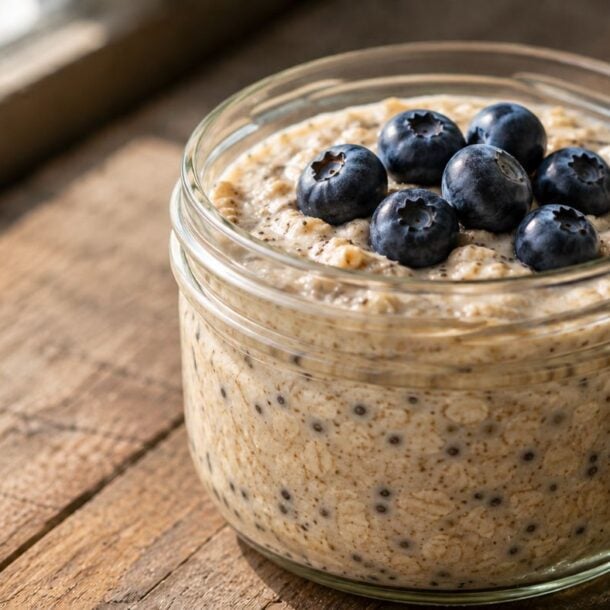
- At Breakfast: Stir a single tablespoon of chia seeds or ground flaxseeds into your oatmeal or yogurt. They are virtually tasteless but expand in your stomach to create a powerful, hormone-sweeping gel.
- At Lunch: Throw a handful of berries (like raspberries or blackberries) on the side of your sandwich. Berries are secretly some of the highest-fiber fruits on the planet.
- At Dinner: Munch on a raw carrot while you’re cooking, or toss some sliced avocado onto your plate. Fun fact: Raw carrots contain a very unique type of fiber that specifically binds to excess estrogen like a magnet, making them a hormone-balancing superpower.
And the bonus – eating more fiber helps keep you full and avoid those mid-morning or mid-afternoon cravings. Learn more about creative ways to add more fiber to your diet.
Habit #3: Giving Your “Good Gut Bugs” a Break (The Fake Sugar Swap)
We live in a world obsessed with “diet,” “sugar-free,” and “zero-calorie” foods. If you look in the average pantry, you’ll find diet sodas, sugar-free coffee syrups, “skinny” ice creams, and high-protein bars.
We reach for these things because we think we’re making the healthy choice. But while these snacks might have zero calories, they are absolute chaos for your hormone health.
Why? Because they are packed with artificial sweeteners like sucralose, aspartame, and saccharin.
Your gut is home to trillions of tiny bacteria. Think of them as your Hormone Recycling Crew. When you have plenty of good bacteria, they keep the bad bacteria in check and ensure your estrogen is processed perfectly.
But fake sugars act like kryptonite to your good gut bugs. Studies show that artificial sweeteners can actually wipe out large chunks of your friendly bacteria crew in a matter of days.
When the good crew dies off, the bad bacteria take over. These bad bugs love to rip open those estrogen trash bags we talked about, causing your old hormones to flood back into your body.
You don’t have to give up sweet treats forever, but your gut bugs desperately need a break from the chemicals. Try making one simple swap a day:
- Swap your afternoon diet soda for a sparkling water mixed with a splash of real fruit juice or a squeeze of fresh lime.
- Trade your sugar-free coffee syrup for a teaspoon of real maple syrup or raw honey.
- Ditch the chemically processed “diet” protein bars for a handful of almonds and a piece of dark chocolate.
By feeding the good bugs and starving the bad ones, you give your gut the exact environment it needs to keep your moods steady and your stomach flat.
READ THIS NEXT: Feeling Bloated and Hormonal? 11 Foods That Support Healthy Estrogen Balance Naturally
Your Body Isn’t Broken—It’s Just Talking to You
The next time you’re feeling bloated, moody, exhausted, and frustrated with your body, remember that your symptoms may not be random. Your body is constantly sending signals about what’s happening beneath the surface.
Sometimes that bloated belly is more than an inconvenience. It may be a sign that your digestive system needs a little extra support. And because your gut and your hormones work so closely together, helping one often helps the other.
You deserve to feel comfortable in your clothes, more like yourself emotionally, and less at the mercy of your monthly cycle. Sometimes the first step isn’t finding the perfect supplement or following the latest wellness trend—it’s simply paying attention to what your body has been trying to tell you all along.
Please note: This website contains affiliate links. As an Amazon Associate, we earn from qualifying purchases at no additional cost to you.