

Please note: This website contains affiliate links. As an Amazon Associate, we earn from qualifying purchases at no additional cost to you.
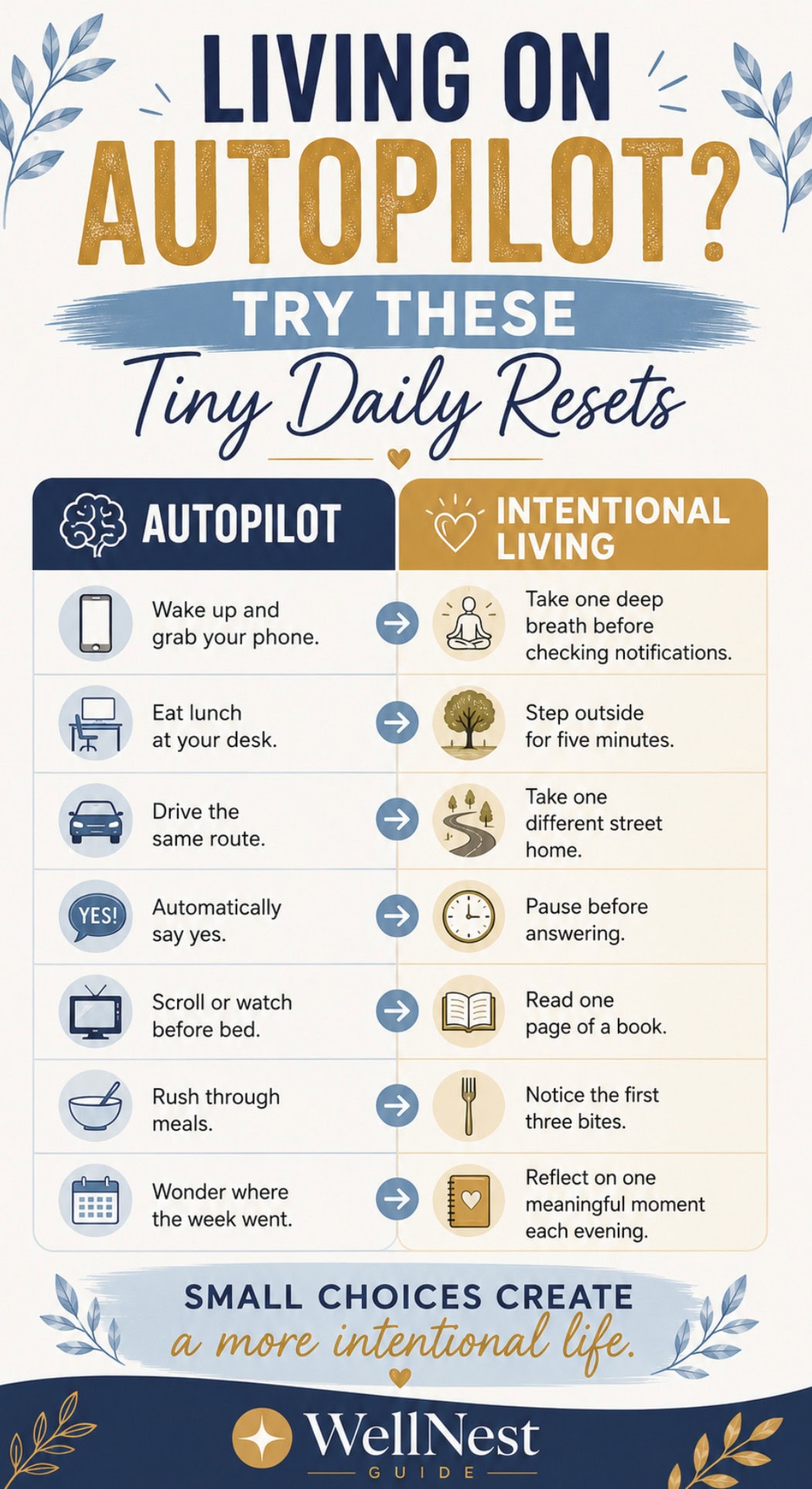
Wake up. Check phone. Drink coffee. Commute. Work. Commute. Eat dinner. Scroll. Sleep. Repeat.
On paper, your life is completely fine. You’re checking the boxes, fulfilling your obligations, and doing what’s expected of you. But underneath, it feels like someone turned down the volume on your life. The colors are a little duller, the days are entirely predictable, and you’re constantly exhausted despite not actually doing anything new.
It feels like drifting. It feels like you’re a passenger in the backseat of a car you’re supposed to be driving. If that sounds familiar, I want you to stop beating yourself up for feeling stuck. You aren’t ungrateful for the life you have—you’re just trapped in a loop of default choices. Breaking that loop doesn’t require blowing up your life; it starts with reclaiming the tiny moments you’ve been sleeping through.
The Autopilot Diagnostic: Are You Living or Just Drifting?
Before we can shift gears, we have to figure out exactly where your brain has been taking the wheel. Autopilot doesn’t look the same for everyone. It usually shows up in one of three distinct flavors.
Read through these signs and see which one sounds like your current daily routine.
1. The Digital Drift (The Mindless Scroll)
Your phone is the ultimate autopilot trigger. It requires zero conscious effort to operate, making it your brain’s favorite place to hide when it wants to turn off.
- [ ] You open an app, close it out of boredom, and immediately reopen the exact same app without thinking.
- [ ] You pick up your phone to check the weather or a text, get distracted, and lock it 20 minutes later without ever doing what you came to do.
- [ ] Your screen time report feels like a personal attack every Sunday morning.
2. The Routine Trap (The Invisible Schedule)
Routines are great for productivity, but when a routine becomes a cage, you stop processing your days. If every day is identical, your brain stops saving the memories.
- [ ] You take the exact same route to work, eat the same three lunches, and watch the same comfort shows on repeat.
- [ ] You find yourself constantly saying phrases like, “I can’t believe it’s already Friday,” or “Where did this month go?”
- [ ] You feel physically exhausted at 6:00 PM, even if you spent the entire day sitting at a desk doing routine tasks.
3. The Emotional Default (The People-Pleasing Yes)
This is the most dangerous type of autopilot. It’s when you automate your boundaries to avoid the temporary discomfort of having an awkward conversation or saying “no.”
- [ ] Your default response to any request is “Yes, of course!” before you’ve even checked your calendar or energy levels.
- [ ] When someone asks how you are, your brain automatically fires off “Good! Just busy!” before you even register how you actually feel.
- [ ] You feel like you’re living a life designed by other people’s expectations, rather than your own choices.
The Takeaway: If you checked off more than three boxes above, congratulations—your brain is working perfectly. It has automated your life to keep things safe and predictable. But predictable is boring.
Now that we know exactly where you’re drifting, let’s look at the hidden cost of staying in this loop—and how it’s secretly stealing your time.
The Hidden Cost: Why the Years Feel Like a Blur
If autopilot is just a harmless energy-saver, why does it leave us feeling so unfulfilled?
The answer lies in how our brains process time. Your brain is hardwired to optimize for novelty. When you experience something new—a new city, a new hobby, a difficult project—your brain has to focus intently. It stamps that experience with a rich, detailed emotional marker.
But when you live on autopilot, every day looks, smells, and feels exactly like the day before. Your brain says, “Nothing new here, no need to waste energy saving this memory.”
The Reality Check: When your brain stops recording new data, your perception of time warps. This is why a two-week vacation to a brand-new country can feel like a month, while three identical months at home can vanish in what feels like a weekend. Autopilot isn’t just saving your energy; it is actively shrinking your timeline.
If you don’t wake up your conscious mind, you don’t just lose your days—you lose your memories of them.
The Fix: 3 “Pattern Interrupters” to Wake Up Your Brain
To break out of autopilot, you do not need to quit your job or move across the country. You just need to introduce Pattern Interrupters. These are tiny, zero-cost physical tweaks that force your prefrontal cortex (your conscious brain) to grab the steering wheel back from your subconscious.
Start with these three micro-steps this week:
DAYS 1 -3 | Shock Your Physical Senses
Force your brain to pay attention to physical reality by breaking a physical habit. Brush your teeth with your non-dominant hand. Take a completely different route home from work, even if it adds five minutes. Sleep on the other side of the bed. It will feel clunky and awkward—and that is exactly the point. That awkwardness is the feeling of your brain waking up.
DAYS 3 – 5 | Create a 5-Second Delay
Autopilot thrives on zero friction. To stop mindless scrolling or eating, put a hurdle in the way. Put a thick rubber band around your phone so you have to physically adjust it before looking at the screen.
Move your social media apps out of your dock and hide them deep inside a folder. That brief five-second delay forces a conscious choice: Do I actually want to do this, or am I just drifting?
DAYS 5 – 7 | The 60-Second Reality Check
Set a random alarm on your phone for the middle of the afternoon. When it goes off, pause whatever you are doing for exactly one minute.
Look around the room and mentally name three specific things you can see, two things you can physically feel (like the chair against your back), and one thing you can hear. This instantly grounds you back into the present moment.
Moving Toward Intentional Living
Once these pattern interrupters start breaking up the fog, you can begin making higher-level, intentional choices. Living intentionally just means replacing default choices with deliberate choices.
Instead of asking “What do I have to do today?” (which triggers your automatic to-do list), start asking yourself: “How do I want to show up for this specific hour?”
- Before a meeting: Don’t just walk in. Decide beforehand: I want to be fully present and ask one insightful question.
- Before dinner: Don’t just turn on the TV. Decide: I’m going to leave my phone in the other room and actually listen to my partner/kids.
Tiny Signs You’re Beginning to Wake Up
One of the biggest misconceptions about becoming more present is that it should feel dramatic. We expect some huge “aha!” moment where everything suddenly looks different.
In reality, waking up from autopilot is much quieter than that.
It usually starts with tiny moments that are easy to overlook—but they’re signs your brain is paying attention again. You might notice things like:
- Your commute feels a little different. Maybe you notice a mural you’ve driven past for years or realize a neighbor planted new flowers.
- You catch yourself before reaching for your phone. Instead of automatically unlocking the screen during every spare moment, you pause and ask yourself if you actually need it.
- Conversations become more memorable. You remember something a friend mentioned last week or find yourself asking one more thoughtful question instead of mentally planning what you’ll say next.
- Time starts feeling a little slower. Not in a boring way, but in a way that makes your days feel fuller because you’re actually experiencing them instead of rushing through them.
- You notice your surroundings again. The smell of fresh coffee. The warmth of the sun coming through the window. A song playing in the grocery store that you haven’t heard in years.
- You pause before saying “yes.” Instead of automatically agreeing to every request, you give yourself permission to check in with your schedule, your energy, and what you genuinely want.
- You remember more about your day. Instead of wondering where the last week disappeared to, you can actually recall specific moments that made you smile, laugh, or stop and think.
These moments may seem insignificant, but they’re actually evidence that you’re reclaiming your attention.
Being present isn’t about squeezing more productivity into your day or constantly practicing mindfulness. It’s about noticing the life that’s already happening around you instead of rushing past it.
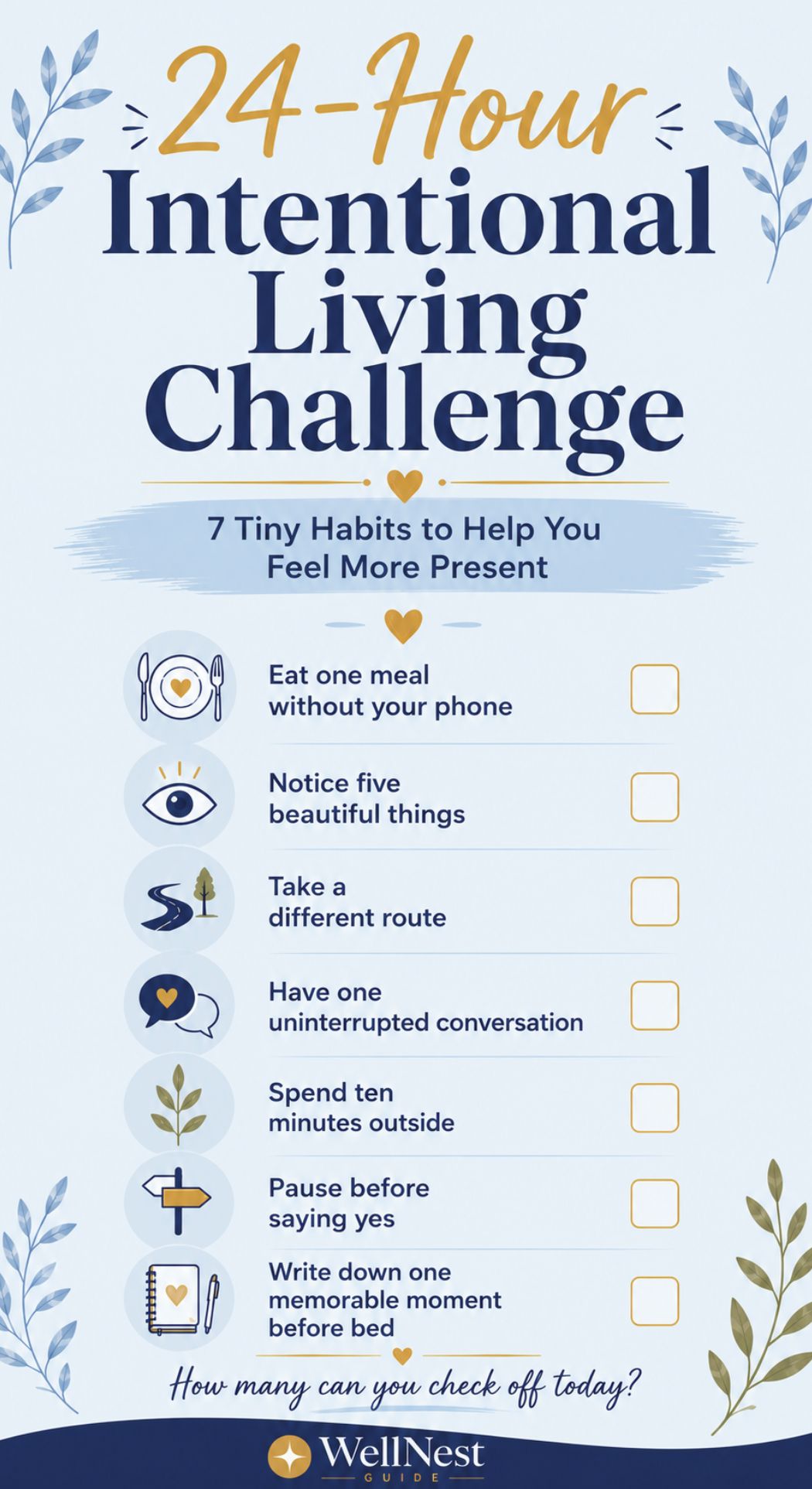
Your 24-Hour Challenge
Don’t try to overhaul your entire routine tomorrow morning—that’s a surefire way to burn out and slide right back into old habits.
Instead, pick just one pattern interrupter from the list above. Do it within the next 24 hours. Wake your brain up for just a few minutes today, and see how much brighter the rest of the day looks.
Living on AutoPilot: FAQs
Why do I feel like I’m living on autopilot?
Many people experience periods where daily routines become so familiar that they stop paying close attention to them. Stress, busy schedules, repetitive habits, and constant digital distractions can all contribute to feeling like you’re simply going through the motions. Adding small moments of novelty and mindfulness throughout the day can help you reconnect with the present.
Is living on autopilot normal?
Absolutely. Our brains naturally create habits to conserve mental energy. The problem isn’t having routines—it’s when those routines become so automatic that you stop noticing your life. The goal isn’t to eliminate habits, but to build moments of awareness into your day.
What’s the difference between living on autopilot and intentional living?
Living on autopilot means moving through your day by habit without much conscious thought. Intentional living means making small, deliberate choices about how you spend your time, attention, and energy. You don’t need to overhaul your life—you simply become more aware of the choices you’re already making.
Can mindfulness help me stop living on autopilot?
Yes. Mindfulness is one way to interrupt automatic habits by bringing your attention back to the present moment. Even simple practices—like taking a deep breath before checking your phone or eating one meal without distractions—can help you feel more grounded.
How long does it take to become more intentional?
There isn’t a timeline. Most people notice small changes within a few days of practicing intentional habits. You may start remembering more about your day, feeling less rushed, or catching yourself before slipping into automatic routines. Those small moments often build into lasting habits over time.
READ THESE NEXT:
My 1-Hour Mental Reset Routine for When I Feel Overwhelmed and Exhausted
My Simple Sunday Reset Routine That Keeps Me on Track
Habit Stacking 101: Simple Habits That Can Change Everything
Please note: This website contains affiliate links. As an Amazon Associate, we earn from qualifying purchases at no additional cost to you.