



Please note: This website contains affiliate links. As an Amazon Associate, we earn from qualifying purchases at no additional cost to you.
Have your feet been trying to tell you something?
Maybe you’ve noticed a tingling sensation in your toes. Perhaps your feet feel numb, unusually cold, or like they’re burning for no obvious reason. You might even find yourself feeling a little less steady on your feet than you used to.
It’s easy to blame these symptoms on getting older, sitting too much, standing too much, or simply having a busy life. Sometimes that’s exactly what’s going on.
But in some cases, strange foot symptoms can be linked to a vitamin B12 deficiency.
Vitamin B12 plays a critical role in maintaining healthy nerves, and when levels become too low, some of the earliest symptoms can show up in the feet. That’s because the nerves that travel to your feet are among the longest in your body, making them especially vulnerable when nerve function is affected.
Let’s take a closer look at some foot symptoms that may be worth paying attention to.
Why Does Vitamin B12 Affect the Feet?
Vitamin B12 helps support the protective coating around your nerves, called the myelin sheath.
Think of it as insulation around electrical wiring.
When B12 levels remain low for long periods, nerve signals may not travel as efficiently. Because the nerves that reach your feet are so long, symptoms often start there before appearing elsewhere.
That doesn’t mean every foot problem is caused by low B12. Far from it.
But if you’re also dealing with fatigue, brain fog, memory issues, dizziness, or other signs of vitamin B12 deficiency, your feet may be offering an important clue.
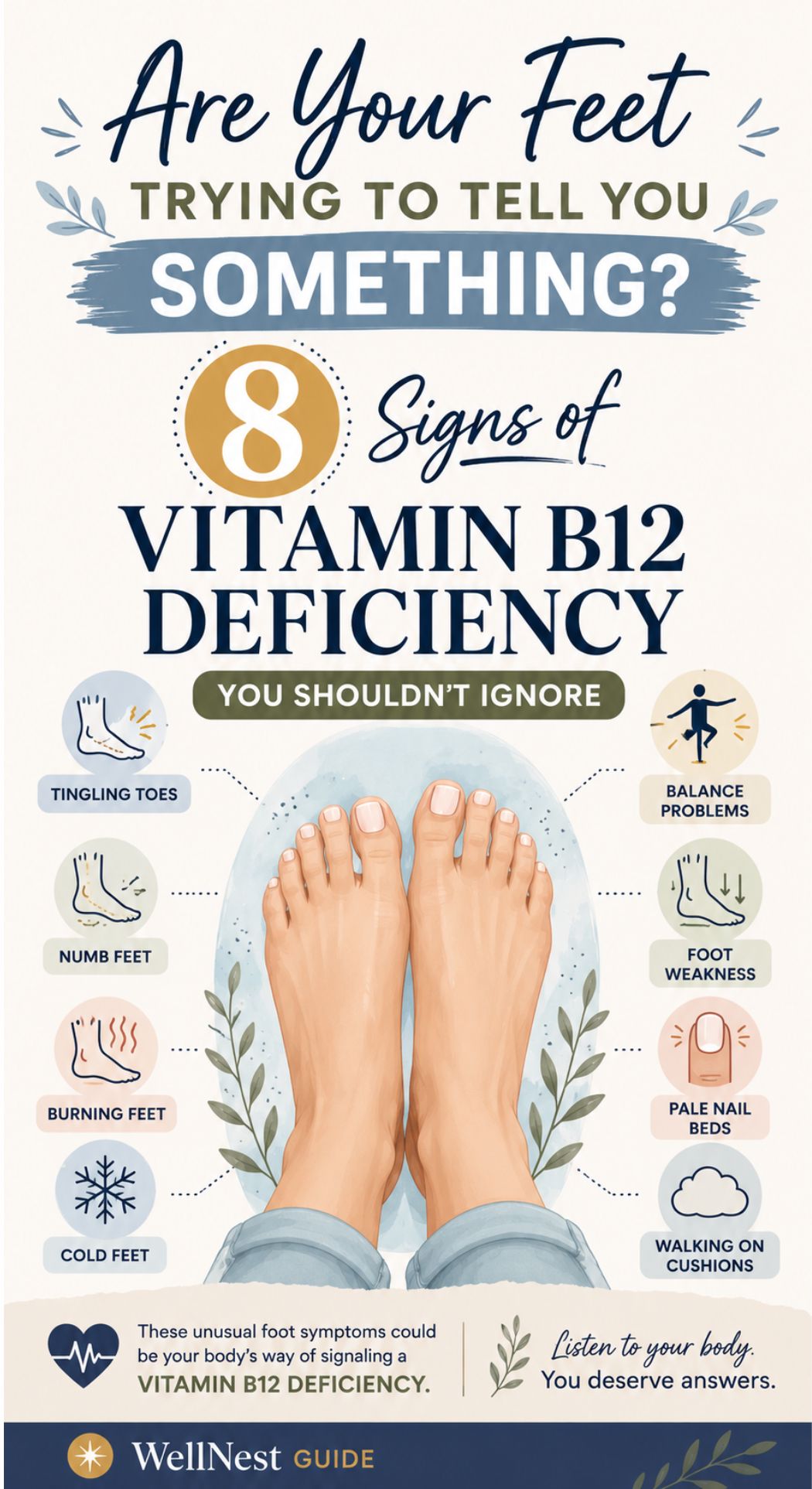
Vitamin B12 Deficiency Symptoms in Your Feet
1. Tingling Toes or Pins-and-Needles Sensations
This is one of the most common neurological symptoms associated with vitamin B12 deficiency. Many people describe it as:
- Pins and needles
- Tingling
- Buzzing
- Prickling sensations
You might notice it occasionally at first, only to realize later that it’s becoming more frequent.
2. Numbness in the Feet
Some people with low B12 notice that parts of their feet feel less sensitive than normal. You may experience:
- Reduced sensation in your toes
- Numb patches on the soles of your feet
- A feeling that your feet are “asleep”
Numbness should always be discussed with a healthcare provider, especially if it continues or worsens over time.
3. Burning Feet
A burning sensation can feel surprisingly uncomfortable. Some people describe their feet as:
- Hot
- Burning
- Stinging
- Sensitive to sheets or socks
The sensation may be more noticeable in the evening or at bedtime.
4. Feet That Always Feel Cold
Do you constantly reach for socks while everyone else seems perfectly comfortable?
Cold feet can have many causes, but in some cases, nerve-related changes and reduced oxygen delivery associated with vitamin B12 deficiency may contribute to feeling unusually cold.
It’s particularly worth noting if cold feet appear alongside other deficiency symptoms.
5. Balance Problems
This symptom often catches people off guard.
Vitamin B12 helps nerves communicate properly with the brain. When those signals become disrupted, balance and coordination can be affected.
You might notice:
- Feeling unsteady when walking
- Tripping more often
- Difficulty walking in the dark
- A general sense that you’re less sure-footed than before
6. Foot Weakness
Sometimes people don’t realize their feet are getting weaker until everyday activities become more challenging. You may notice issues like:
- Difficulty climbing stairs
- Trouble walking long distances
- A feeling that your feet tire more easily
While weakness can have many causes, it’s another symptom worth discussing with your healthcare provider.
7. Pale Feet or Pale Nail Beds
This is one of the few visible signs that may occasionally accompany vitamin B12 deficiency.
Because low B12 can contribute to anemia, some people notice:
- Pale skin
- Less pink color in their nail beds
- Feet that appear lighter than usual
This symptom is not specific to B12 deficiency, but it can sometimes occur alongside other signs.
8. A Feeling That You’re Walking on Cotton or Cushions
This unusual symptom is one many people struggle to describe.
Some individuals report feeling like:
- They’re walking on thick socks
- There’s padding under their feet
- The floor feels different than it should
This altered sensation can occur when nerves aren’t transmitting signals normally.
Who Is Most at Risk for Vitamin B12 Deficiency?
Certain groups are more likely to develop low B12 levels, including:
- Adults over age 50
- Vegetarians and vegans
- People with Crohn’s disease or celiac disease
- Individuals who have had weight-loss surgery
- People taking acid-reducing medications
- People taking metformin
- Anyone with digestive conditions that affect nutrient absorption
People using GLP-1 medications may also want to pay attention to overall nutrient intake, especially if appetite has been significantly reduced.
Other B12 Articles You Might Find Helpful
- 15 Vitamin B12 Deficiency Symptoms Most People Miss
- Foods That Are Rich in B12 Vitamins (coming soon!)
- How Much B12 Should I Take With Wegovy?
When Should You Talk to a Doctor?
Foot symptoms can be caused by many different conditions, including diabetes, circulation problems, nerve disorders, injuries, and vitamin deficiencies.
That’s why self-diagnosing based on symptoms alone isn’t a great idea.
If you’re experiencing persistent tingling, numbness, balance problems, or other unexplained foot symptoms, a healthcare provider can help determine whether vitamin B12 deficiency or another condition may be involved.
A simple blood test is often enough to evaluate your B12 levels.
How to Increase Vitamin B12
If testing reveals low B12 levels, your healthcare provider may recommend:
- Vitamin B12-rich foods
- Fortified foods
- Oral B12 supplements
- B12 injections in certain cases

THORNE - Vitamin B12 - as Methylcobalamin - Supports Heart & Nerve Health, Blood Cell Function, Restful Sleep & Methylation* - Third-Party Certified - Gluten, Dairy & Soy-Free - 60 Capsule...
Shop on Amazon
$24.00
Supports Heart & Nerve Health, Blood Cell Function, Restful Sleep & Methylation. Excellent source if you have a Vitamin B12 deficiency.
We earn a commission if you make a purchase, at no additional cost to you.
10/10/2026 12:08 am GMT
Foods naturally rich in vitamin B12 include:
- Salmon
- Tuna
- Beef
- Eggs
- Dairy products
- Shellfish
Vitamin B12 Deficiency Foot Symptoms: FAQs
Can a vitamin B12 deficiency cause foot pain?
It can. While not everyone experiences pain, some people with vitamin B12 deficiency report burning, tingling, stinging, or uncomfortable sensations in their feet. These symptoms are typically related to nerve function rather than an injury or structural problem with the foot itself.
What do B12 deficiency feet feel like?
People describe the sensation in many different ways. Common descriptions include pins and needles, numbness, burning, cold feet, tingling toes, or feeling like they’re walking on thick socks or cushions. Symptoms can range from mild and occasional to more persistent.
Can low B12 cause numb toes?
Yes. Numbness in the toes or feet is one of the more common neurological symptoms associated with vitamin B12 deficiency. Because the nerves traveling to the feet are among the longest in the body, symptoms often appear there first.
Can a vitamin B12 deficiency affect balance?
Yes. Vitamin B12 helps maintain healthy nerve function. When levels are low, communication between the nerves and the brain can be affected, which may contribute to balance problems, unsteadiness, or an increased risk of falls.
Can B12 deficiency cause cold feet?
Possibly. Some people with vitamin B12 deficiency report that their feet feel unusually cold. While cold feet can have many causes, low B12 may contribute through its effects on nerve function and red blood cell production.
Are foot symptoms from B12 deficiency reversible?
In many cases, symptoms improve once the deficiency is identified and treated. However, the longer a severe deficiency goes untreated, the greater the risk of lasting nerve damage. That’s why it’s important to discuss persistent symptoms with your healthcare provider.
How do doctors test for vitamin B12 deficiency?
A healthcare provider can usually evaluate vitamin B12 levels with a simple blood test. Depending on your symptoms and medical history, they may also order additional tests to look for anemia or other nutrient deficiencies.
What foods are highest in vitamin B12?
Some of the best food sources of vitamin B12 include salmon, tuna, beef, eggs, dairy products, shellfish, and fortified foods. If you follow a vegetarian or vegan diet, it may be more challenging to get enough B12 through food alone.
Can foot symptoms be caused by something other than B12 deficiency?
Absolutely. Tingling, numbness, burning feet, and balance problems can also be linked to diabetes, circulation issues, nerve disorders, injuries, thyroid conditions, medication side effects, and other vitamin deficiencies. That’s why it’s important to get an accurate diagnosis rather than assuming B12 is the cause.
The Bottom Line
Your feet may not be the first place you’d expect a vitamin deficiency to show up, but they can sometimes provide important clues.
Tingling toes, numbness, burning sensations, balance problems, and cold feet aren’t always caused by vitamin B12 deficiency. However, when these symptoms appear alongside fatigue, brain fog, memory issues, or other signs of low B12, they’re worth paying attention to.
Sometimes the little things your body is trying to tell you turn out to be surprisingly important.
Please note: This website contains affiliate links. As an Amazon Associate, we earn from qualifying purchases at no additional cost to you.